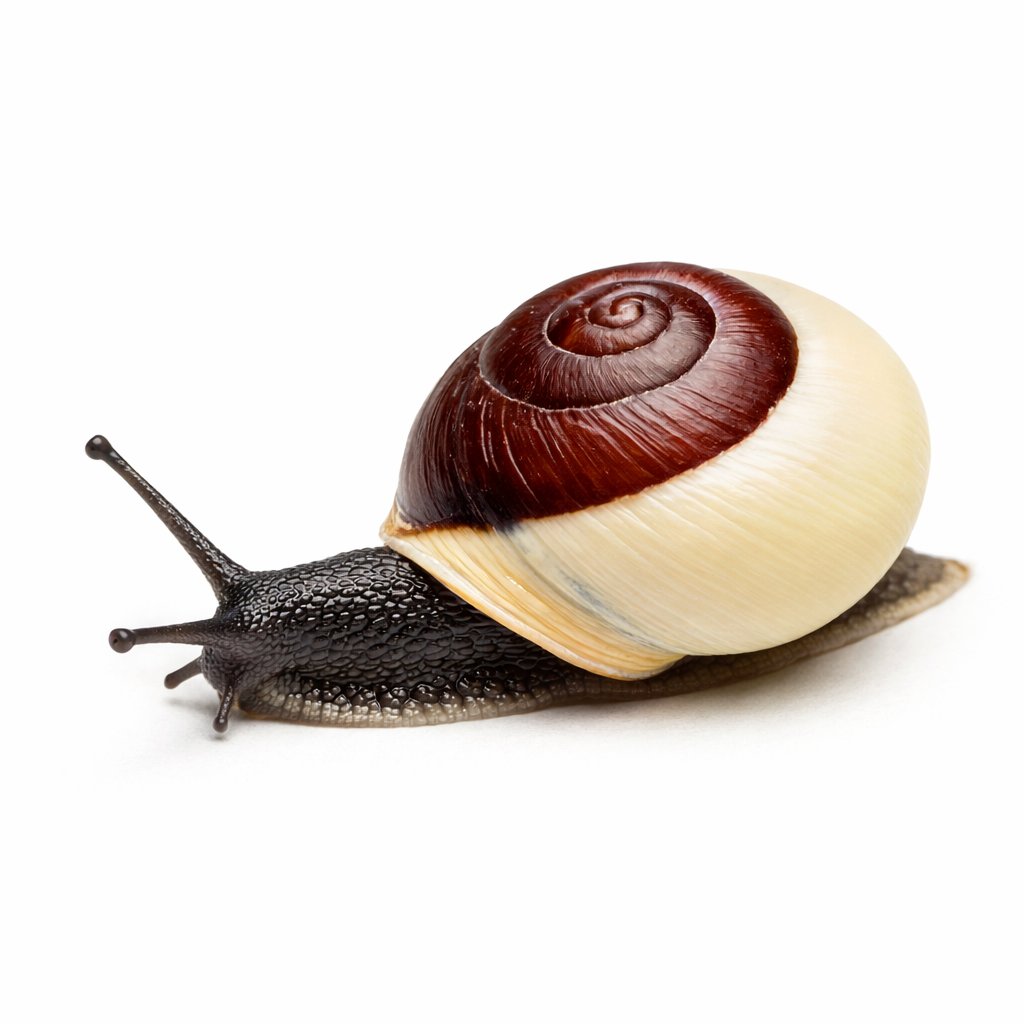
Native snail species found in rainforest and moist environments.
The Atherton Tableland Bicoloured Snail is a native Queensland land snail found primarily within the rainforests and moist forest habitats of the Atherton Tablelands. This attractive species thrives in cool, humid environments where it feeds on decaying leaves, fungi and other organic material found on the forest floor. By recycling organic matter, it plays an important role in maintaining healthy rainforest ecosystems. Unlike introduced pest snails, the Atherton Tableland Bicoloured Snail is not considered a threat to gardens, crops or buildings and should be appreciated as part of Queensland’s unique native wildlife. Because of its specialised habitat requirements, it is rarely encountered around suburban homes. If found in natural areas, it should be left undisturbed. Conservation of native rainforest habitat is important to ensure the continued survival of this distinctive Australian snail.
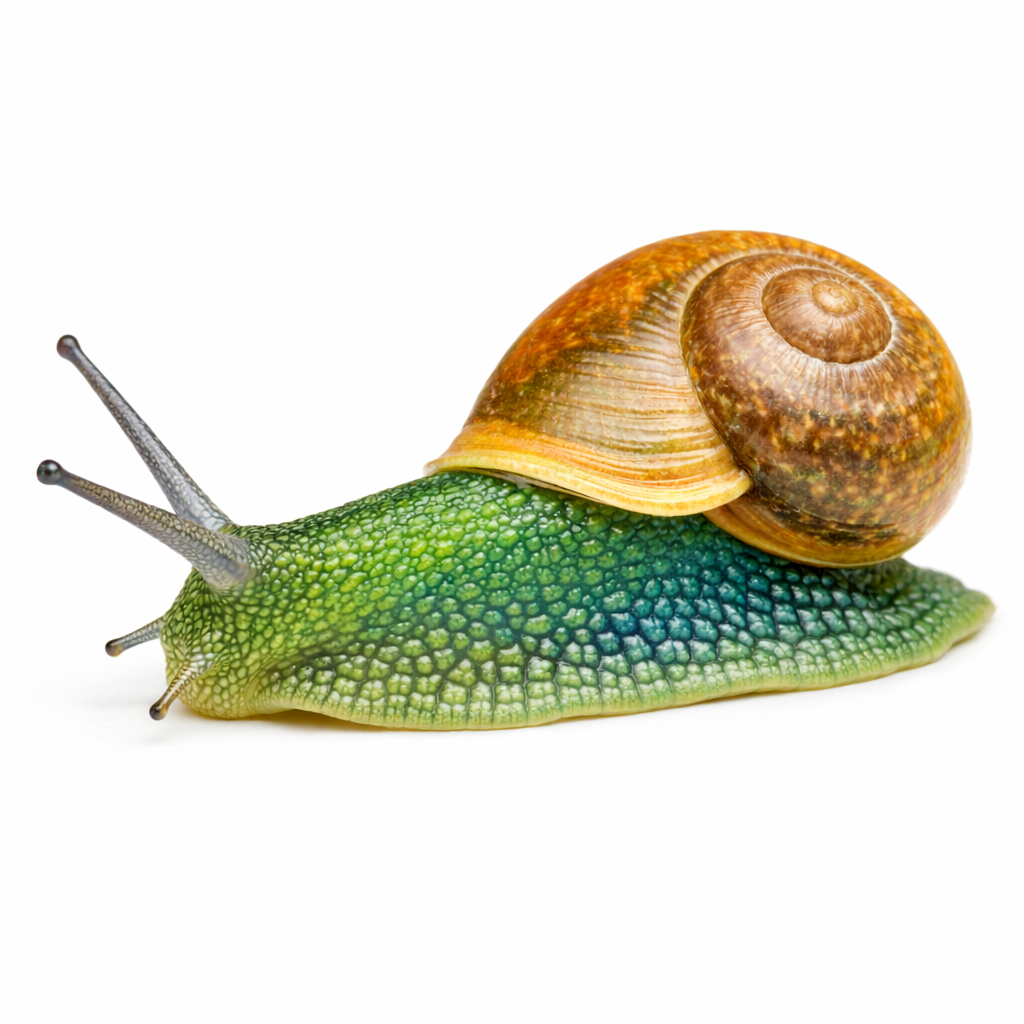
Invasive semi-slug known for damaging plants and spreading parasites.
The Chameleon Semi-Slug is an invasive pest species that has become established in parts of Queensland, particularly in warm, humid environments. It is recognised by its small external shell and elongated body, allowing it to move quickly across gardens, walls and outdoor structures. This species feeds on a wide range of vegetables, ornamental plants, seedlings and fruit, causing significant damage in home gardens and commercial horticulture. Of greater concern, the Chameleon Semi-Slug has been associated with parasites that may pose health risks if contaminated slugs or their slime are accidentally consumed on unwashed produce. Homeowners should avoid handling these slugs with bare hands and wash garden produce thoroughly before eating. Reducing moisture, removing hiding places and maintaining good garden hygiene will help discourage infestations, while professional pest management may be appropriate where large populations become difficult to control.
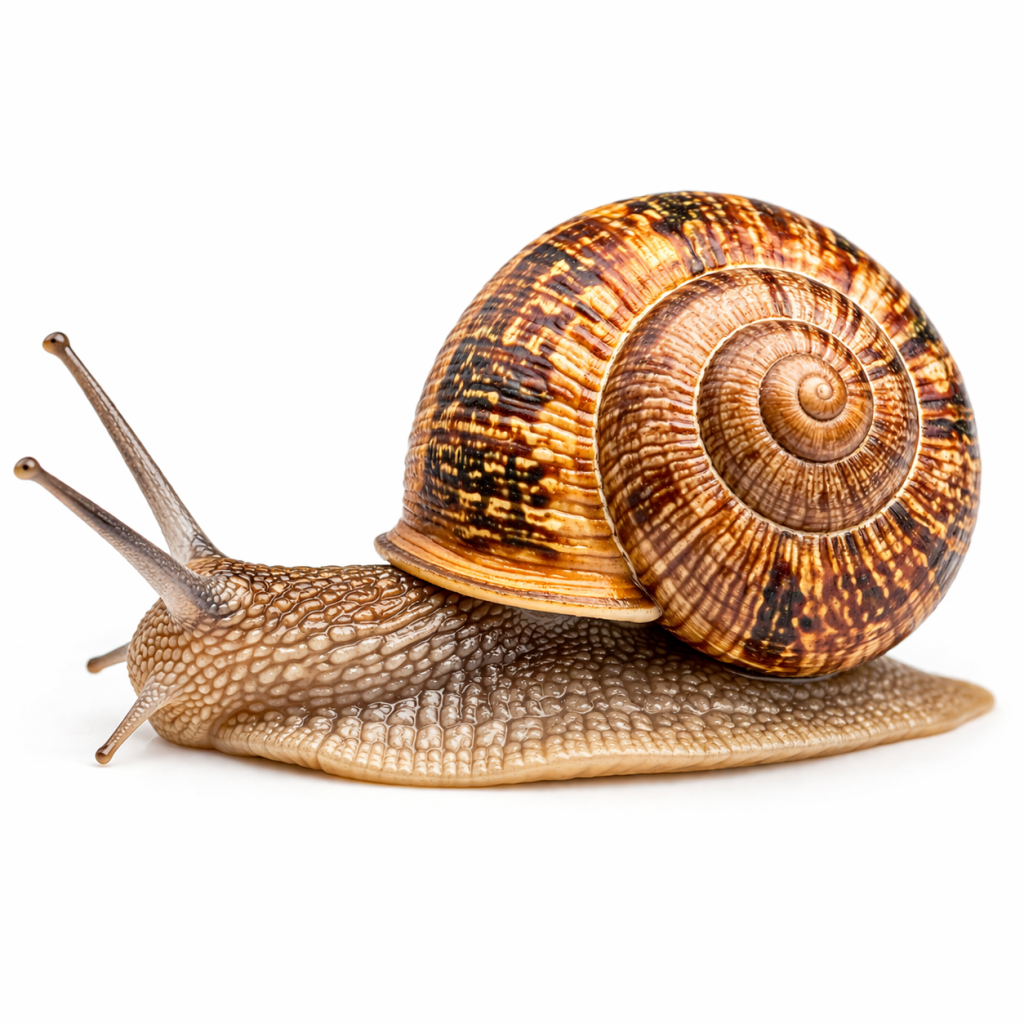
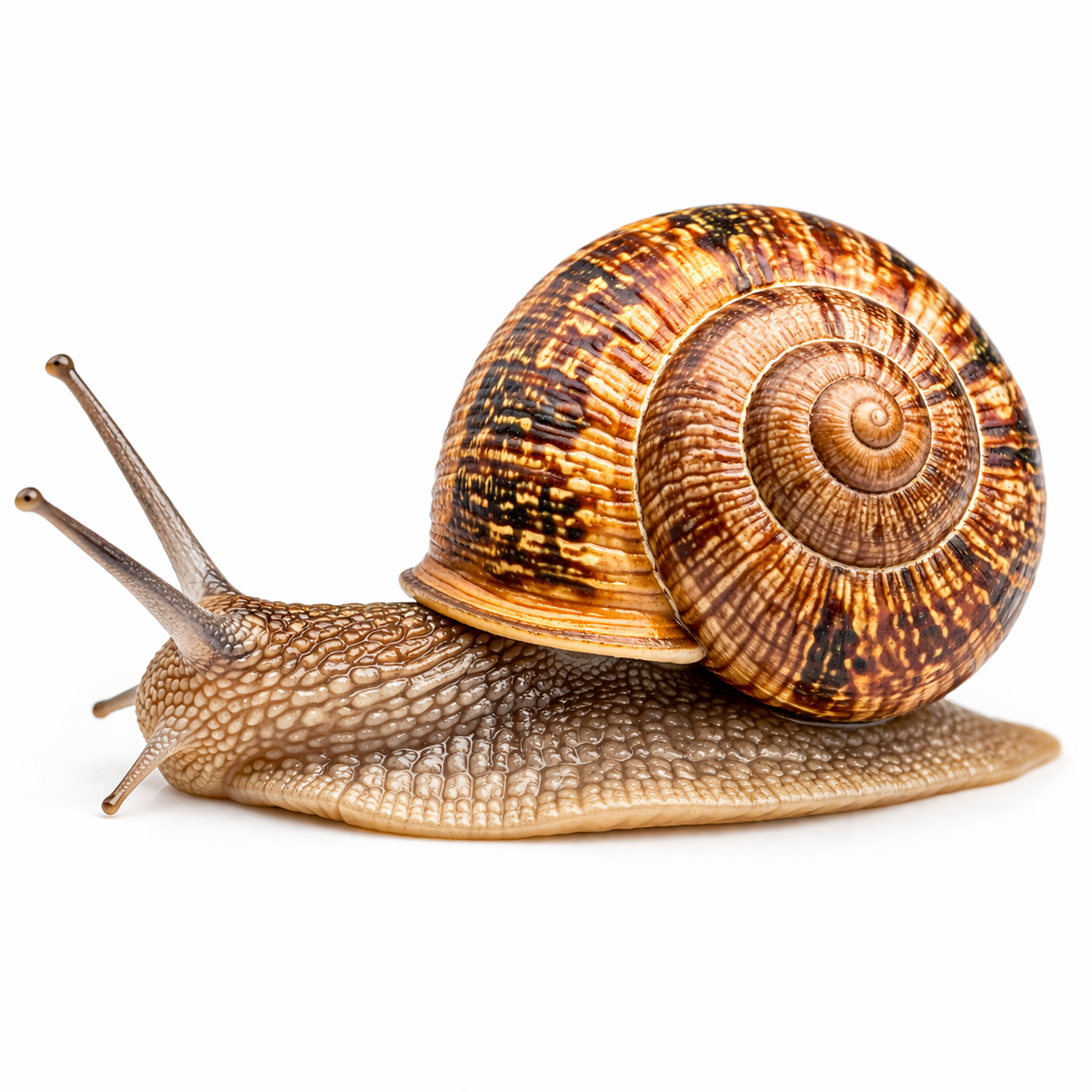
Common garden pest that feeds on plants and vegetables.
The European Garden Snail is one of the most common garden pests found throughout Queensland, feeding on a wide variety of vegetables, flowers, herbs, fruit trees and ornamental plants. It is most active during cool, damp conditions and often hides beneath pots, mulch, rocks and dense vegetation during the day before emerging at night to feed. Characteristic signs of infestation include irregular holes in leaves, damaged seedlings and the distinctive silvery slime trails left behind as the snails move. Large populations can quickly damage vegetable gardens and newly planted landscapes if left unmanaged. Removing hiding places, reducing excess moisture and using appropriate barriers or traps can help reduce snail numbers. Where infestations become severe or affect valuable gardens, professional pest control can provide effective treatment and long-term management strategies.
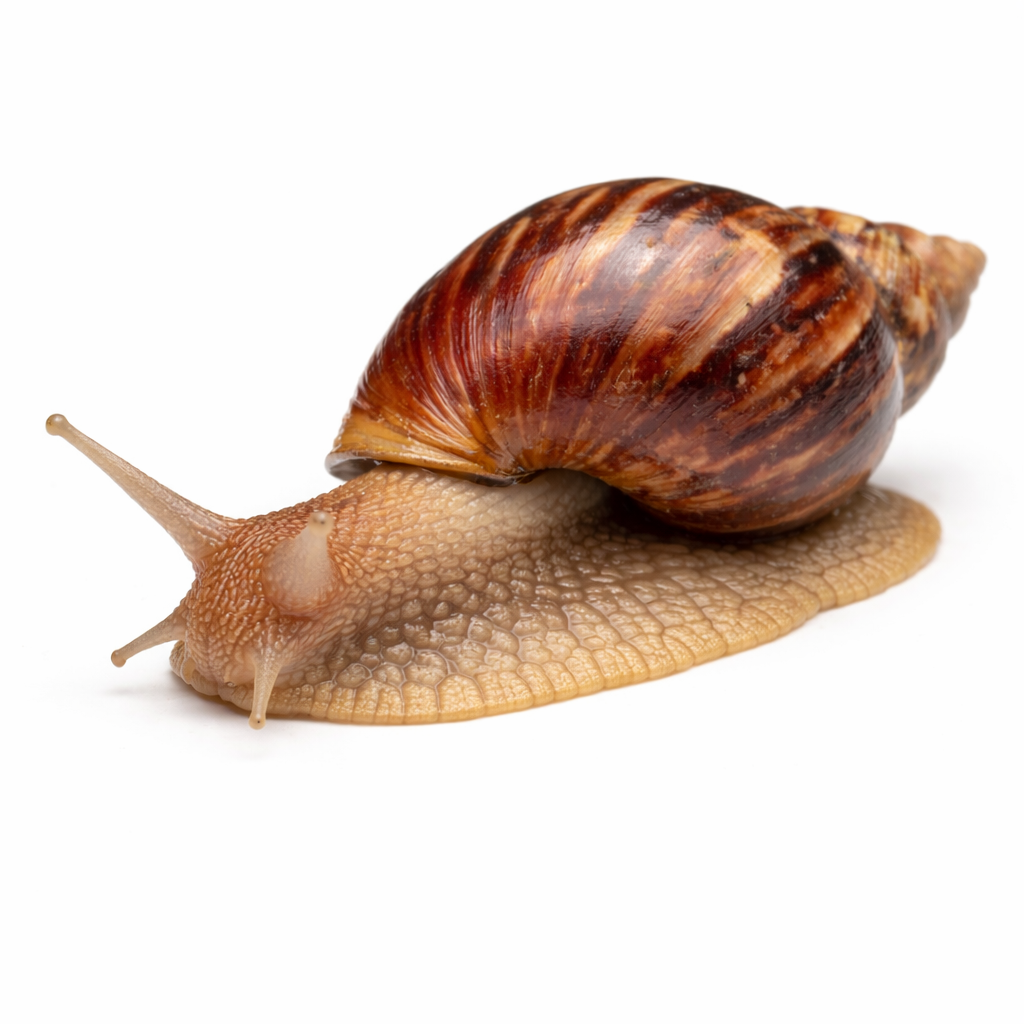
Large invasive snail species that damages crops and plants.
The Giant South African Snail is a large invasive land snail regarded as one of the world’s most destructive agricultural pests. It feeds on hundreds of plant species, including vegetables, fruit trees, ornamental plants and agricultural crops, causing extensive economic damage where populations become established. In addition to damaging plants, this snail may also feed on plaster and other calcium-rich materials around buildings to support shell growth. Because of its invasive nature and ability to reproduce rapidly, strict biosecurity measures apply wherever this species is detected. Homeowners should never attempt to relocate suspected Giant South African Snails without seeking appropriate advice, as reporting requirements may apply. Early detection and rapid response are essential to preventing establishment, and professional pest management should always be involved where this invasive species is suspected.
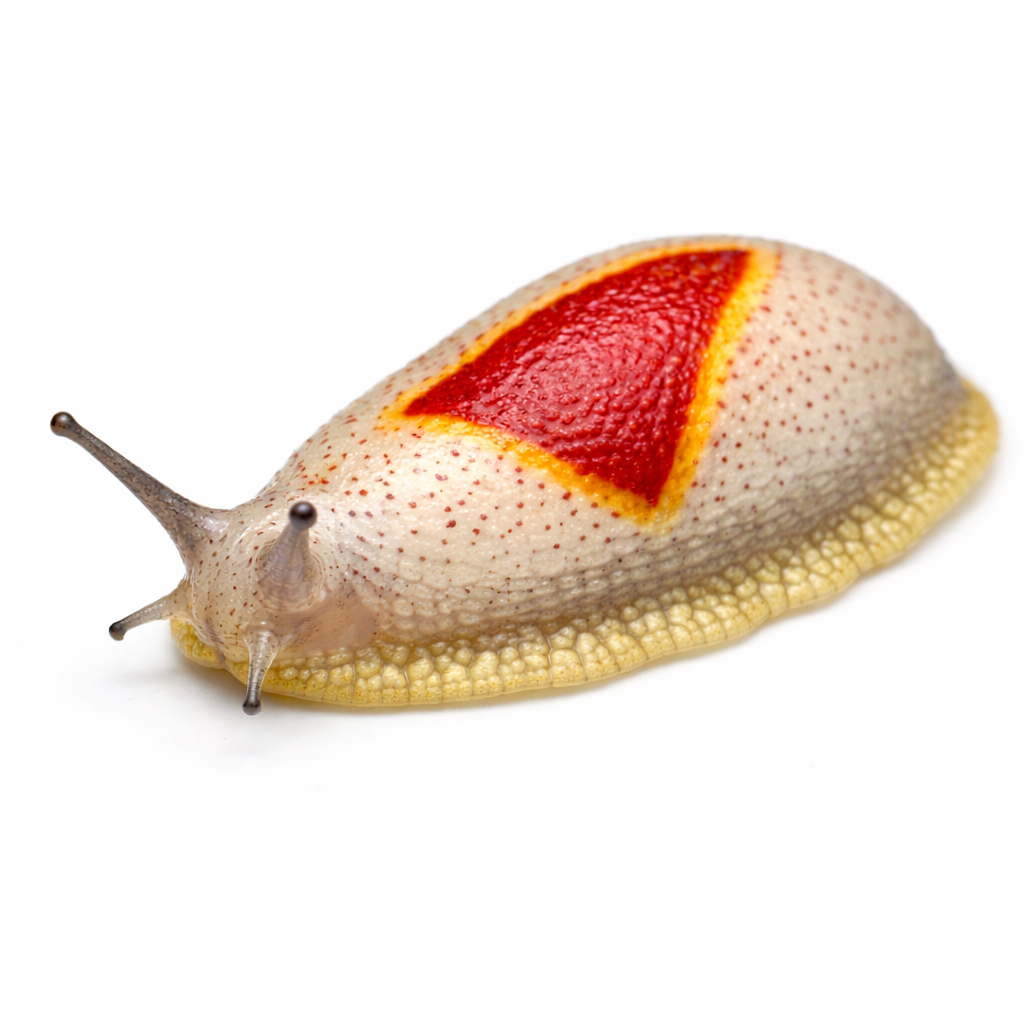
Large native slug with distinctive triangular markings.
The Red Triangle Slug is one of Australia’s largest native slugs and is easily recognised by the distinctive red triangular marking running along its back. Found throughout Queensland’s forests, gardens and moist bushland, it feeds mainly on algae, fungi, mosses and decaying organic material rather than healthy garden plants. As a result, it plays an important role in recycling nutrients and maintaining healthy natural ecosystems. Although its large size often surprises homeowners, the Red Triangle Slug is harmless to people, pets and buildings and is generally not considered a garden pest. It is most active after rain and during humid weather when conditions are ideal for movement and feeding. In almost all situations, this native slug should be left undisturbed and appreciated as part of Australia’s unique wildlife.
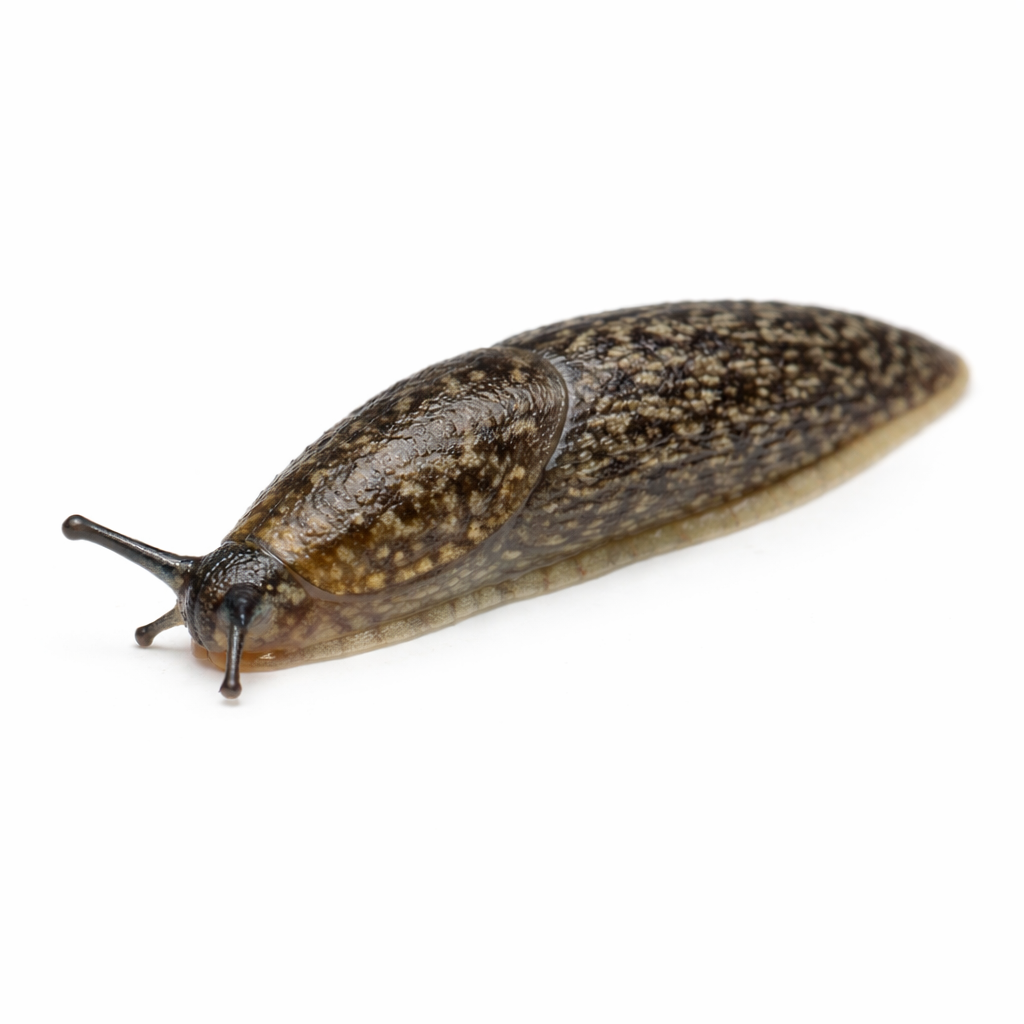
Common slug species that feeds on crops and garden plants.
The Reticulated Field Slug is a widespread agricultural and garden pest commonly found throughout Queensland wherever moisture and vegetation are abundant. Unlike native slugs, this introduced species feeds aggressively on seedlings, vegetables, herbs, flowers and many commercial crops, often causing extensive damage overnight. Irregular holes in leaves, damaged young plants and silvery slime trails are common signs of infestation. Reticulated Field Slugs hide beneath mulch, pots, rocks and dense vegetation during the day before emerging after dark to feed. Reducing moisture, removing shelter and maintaining tidy garden beds will help reduce suitable habitat. Where slug numbers become excessive or valuable plants are being damaged, professional pest management can provide effective control strategies tailored to the specific environment.
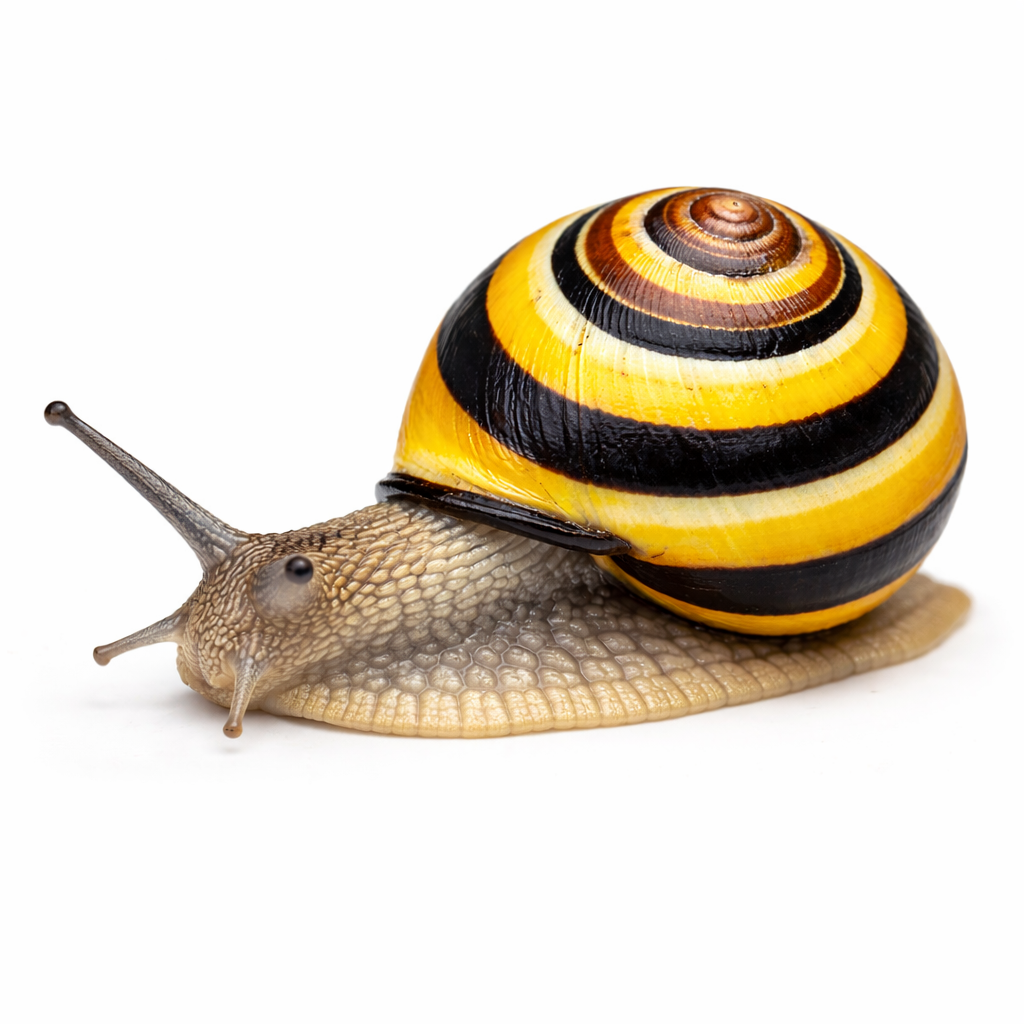
Native snail species with distinctive banded shell pattern.
Robert Irwin’s Banded Snail is a recently described native Australian land snail named in honour of conservationist Robert Irwin. Found within Queensland’s natural forests and rainforest habitats, this attractive species contributes to healthy ecosystems by feeding on decaying vegetation, fungi and other organic material. It is not regarded as a household or agricultural pest and poses no threat to buildings, gardens or food supplies. Like many native land snails, it is sensitive to habitat loss and environmental change, making the protection of natural bushland important for its long-term survival. Homeowners who encounter this species should simply enjoy observing it in its natural environment and avoid disturbing its habitat. Native snails such as this are an important part of Queensland’s remarkable biodiversity and generally require no pest management intervention.