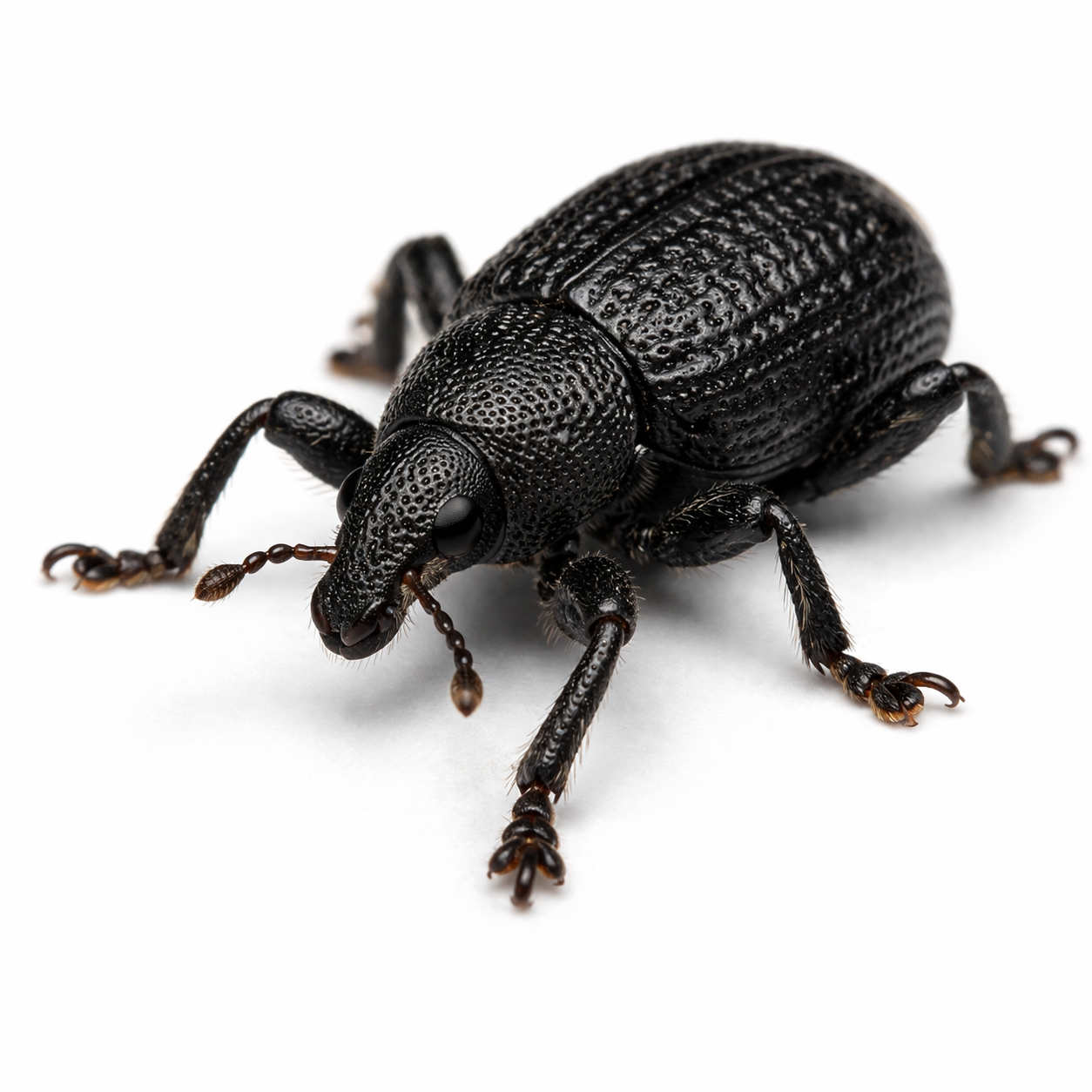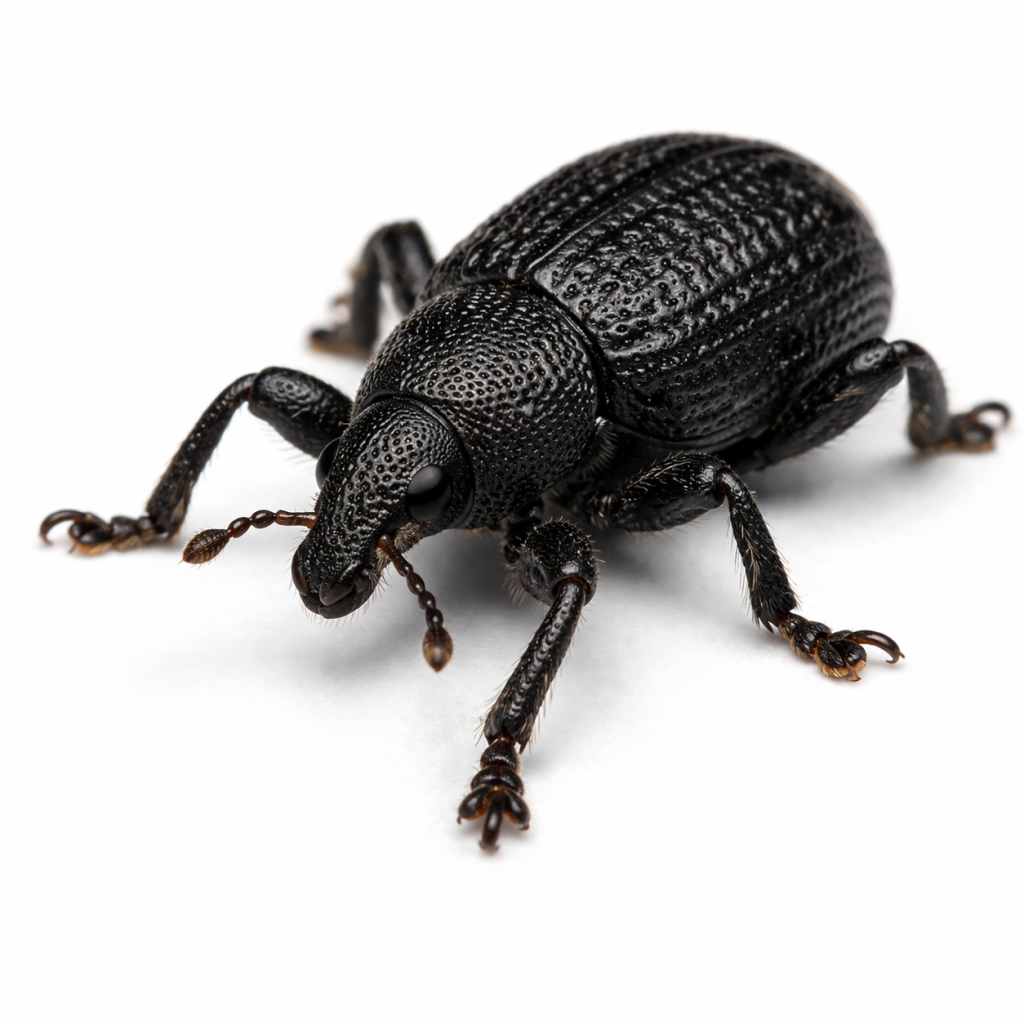
Small beetle that feeds on plants and can damage vegetation.
The Black Short-Nosed Weevil is a small plant-feeding beetle commonly found in Queensland gardens, nurseries and landscaped areas. Adult weevils feed on leaves, creating irregular notches around the edges, while their larvae develop in the soil where they feed on plant roots. Heavy infestations can weaken ornamental plants, vegetables and young shrubs by reducing root growth and damaging foliage at the same time. Although established plants often recover from minor feeding, seedlings and newly planted specimens are far more vulnerable. Regular inspection of plants, maintaining healthy soil and removing heavily infested vegetation can help reduce weevil activity. Where large populations develop or valuable landscape plants are affected, professional pest management can identify the species involved and recommend the most effective long-term treatment strategy.
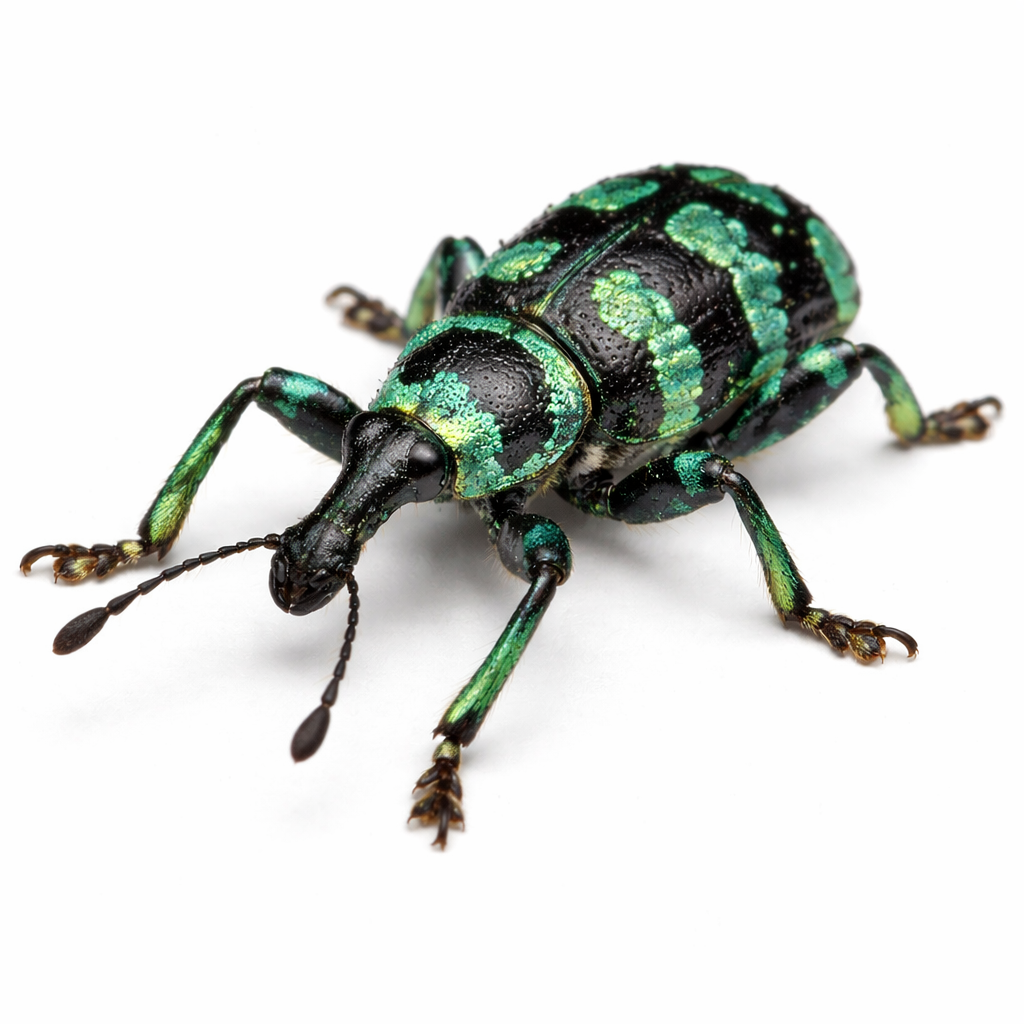
Distinctive native weevil commonly found on coastal plants.
The Botany Bay Weevil is one of Australia’s most distinctive native beetles, recognised by its striking black and green markings and robust body. It is commonly associated with coastal vegetation and native forests throughout parts of Queensland, where adults feed on the leaves of various native plants. Despite its impressive appearance, the Botany Bay Weevil is not regarded as a significant household or agricultural pest and rarely causes serious damage to healthy vegetation. It forms part of Australia’s unique native wildlife and contributes to the natural balance of bushland ecosystems. Homeowners may occasionally encounter these colourful beetles in gardens bordering native vegetation, particularly during warmer months. In almost all situations they should be appreciated rather than controlled, with no pest management required.
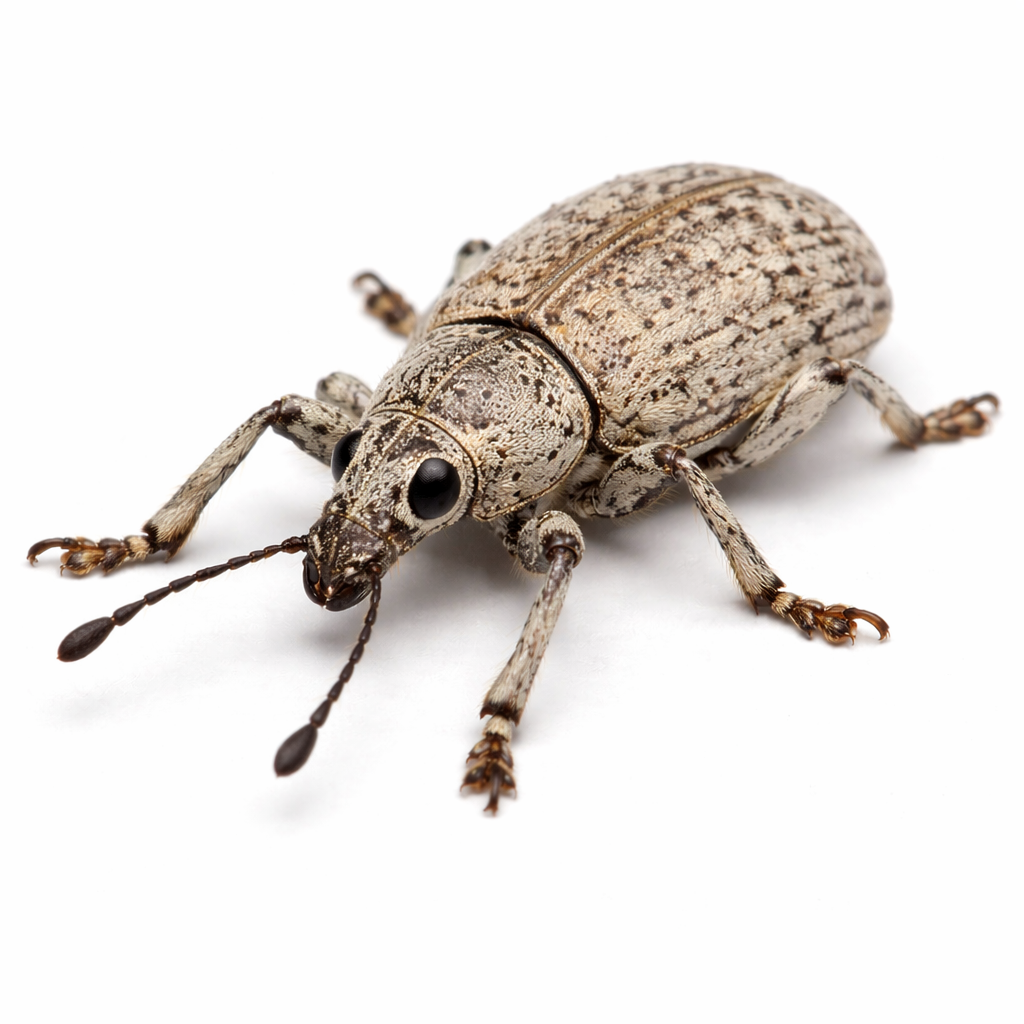
Plant-feeding beetle that targets eucalyptus trees.
Eucalyptus Weevils are plant-feeding beetles that attack eucalyptus trees by feeding on leaves, buds and young shoots. Both adult weevils and their larvae contribute to foliage damage, which may result in leaf distortion, reduced growth and, during severe infestations, noticeable defoliation. Healthy mature trees usually recover naturally, but young ornamental trees, nursery stock and stressed eucalyptus specimens can suffer more significant impacts. These weevils are commonly found in parks, bushland, streetscapes and residential gardens throughout Queensland. Monitoring tree health, encouraging natural predators and maintaining vigorous plant growth can often reduce the effects of infestation. Where valuable trees experience repeated or severe damage, professional arboricultural or pest management advice may help determine the most appropriate treatment.
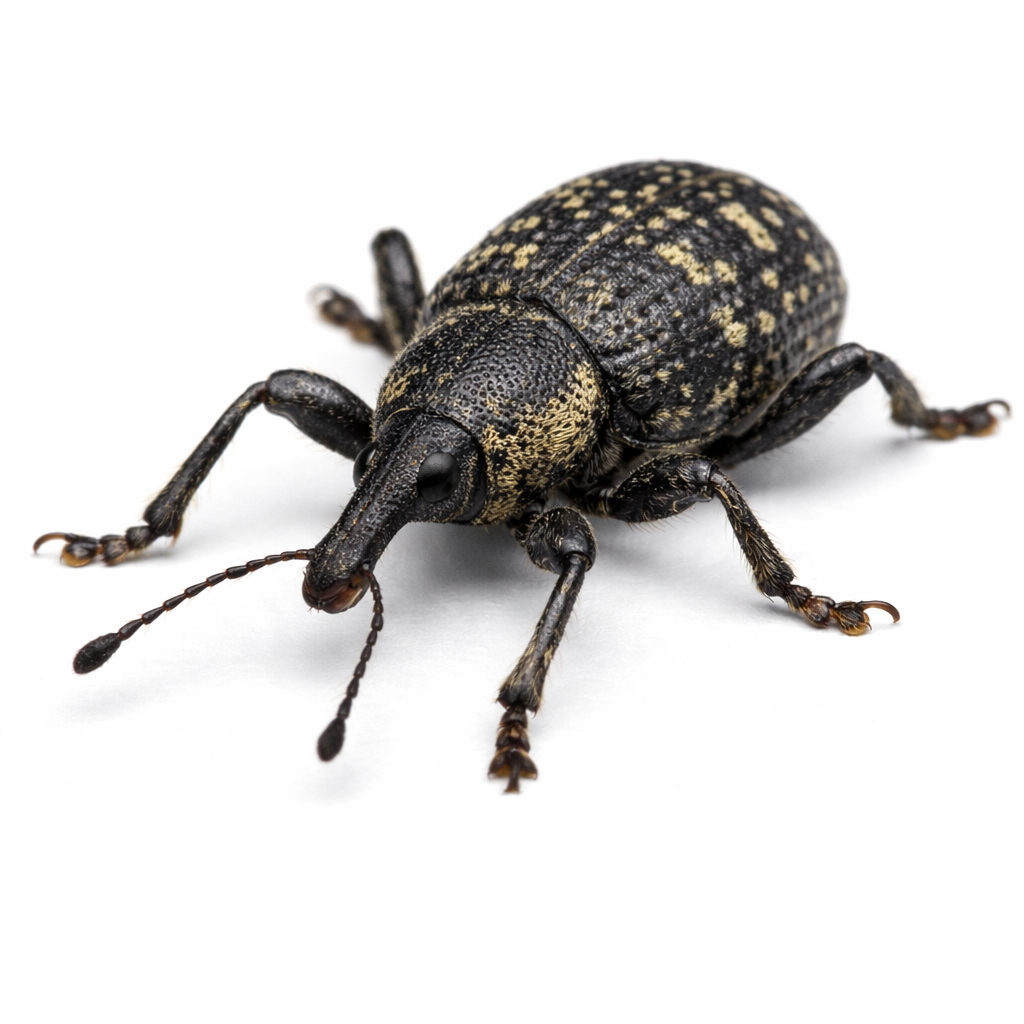
Pest that damages fruit trees by feeding on roots and foliage.
Fruit Tree Root Weevils are destructive pests that attack a wide range of fruit trees and ornamental plants throughout Queensland. Adult weevils feed on leaves, producing characteristic notches along the leaf margins, while the larvae remain hidden beneath the soil feeding on roots. Root damage can reduce water and nutrient uptake, causing poor growth, wilting, reduced fruit production and, in severe cases, plant death. Young trees are particularly susceptible because their root systems are still developing. Regular inspection, maintaining healthy soil and monitoring for early signs of damage are important parts of effective management. Where infestations become established, professional pest control can assist with targeted treatment programs that address both adult weevils and their underground larvae.
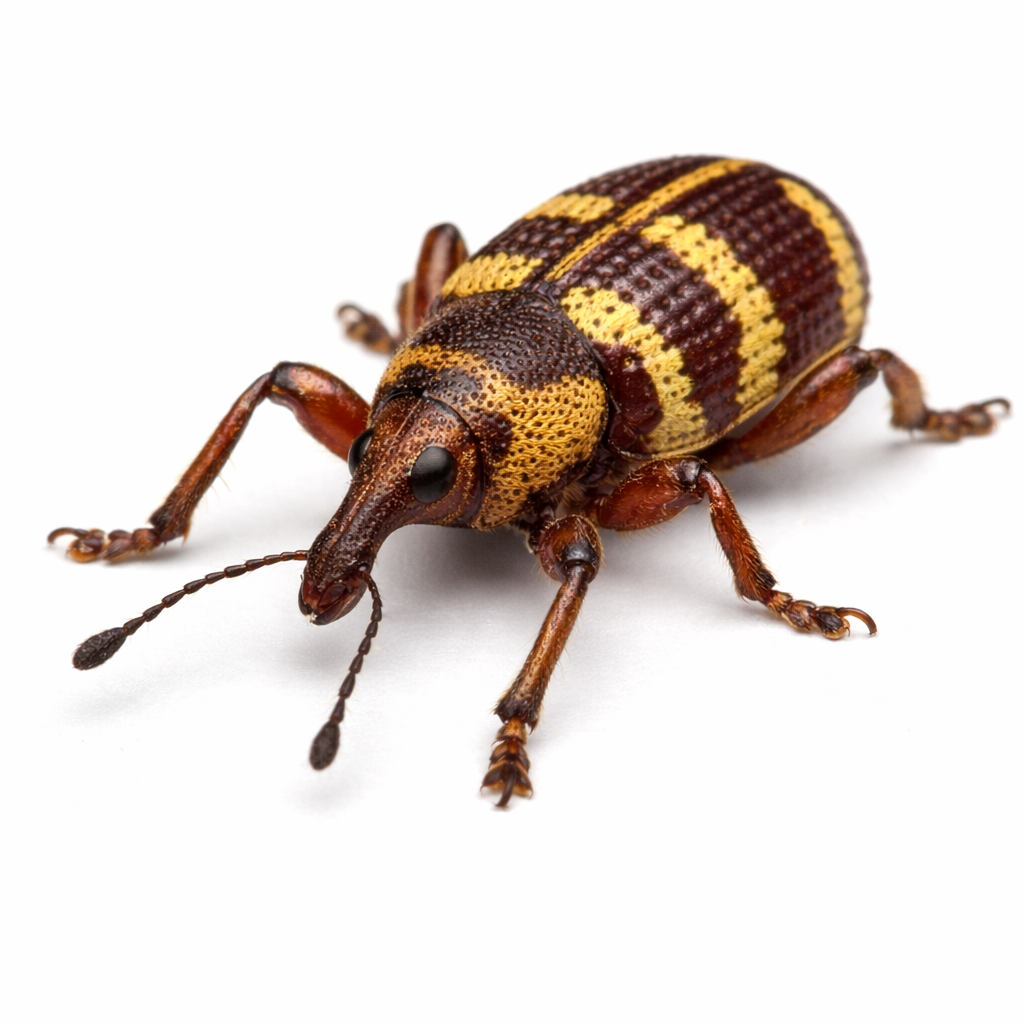
Pest species that damages lychee trees by girdling stems.
The Lychee Stem Girdler Weevil is an important pest of lychee trees and commercial orchards throughout parts of Queensland. Adult females damage trees by chewing around young stems before laying their eggs, effectively girdling the branch and restricting the movement of water and nutrients. As a result, affected shoots wilt, die back and may eventually break away from the tree, reducing both tree health and fruit production. Heavy infestations can significantly impact commercial yields if left unmanaged. Regular orchard inspections and early removal of damaged stems are essential for reducing breeding opportunities. Professional pest management provides growers and homeowners with effective monitoring and treatment strategies that help protect valuable lychee trees from ongoing damage.
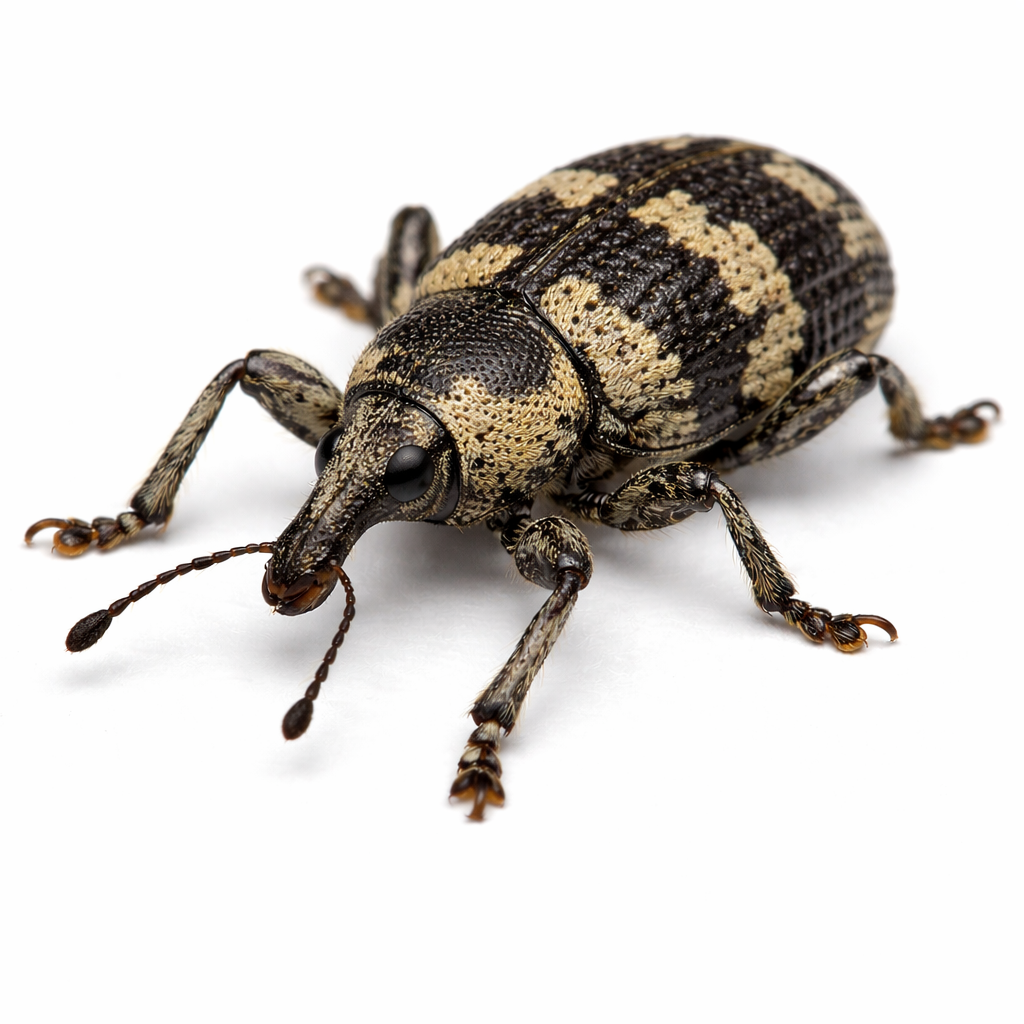
Native weevil species associated with banksia plants.
The Swamp Banksia Weevil is a native Australian beetle closely associated with Banksia species growing in Queensland’s heathlands, coastal vegetation and native bushland. Adult weevils feed on leaves and flower spikes while contributing to the complex ecological relationships that exist within native plant communities. They are not regarded as significant pests of homes, buildings or commercial landscapes and rarely require any form of management. Because they depend on native vegetation, Swamp Banksia Weevils are an important part of Australia’s biodiversity and should generally be left undisturbed. Homeowners may occasionally observe them on Banksia plants in native gardens, where they usually cause only minor cosmetic feeding damage that healthy plants readily tolerate.
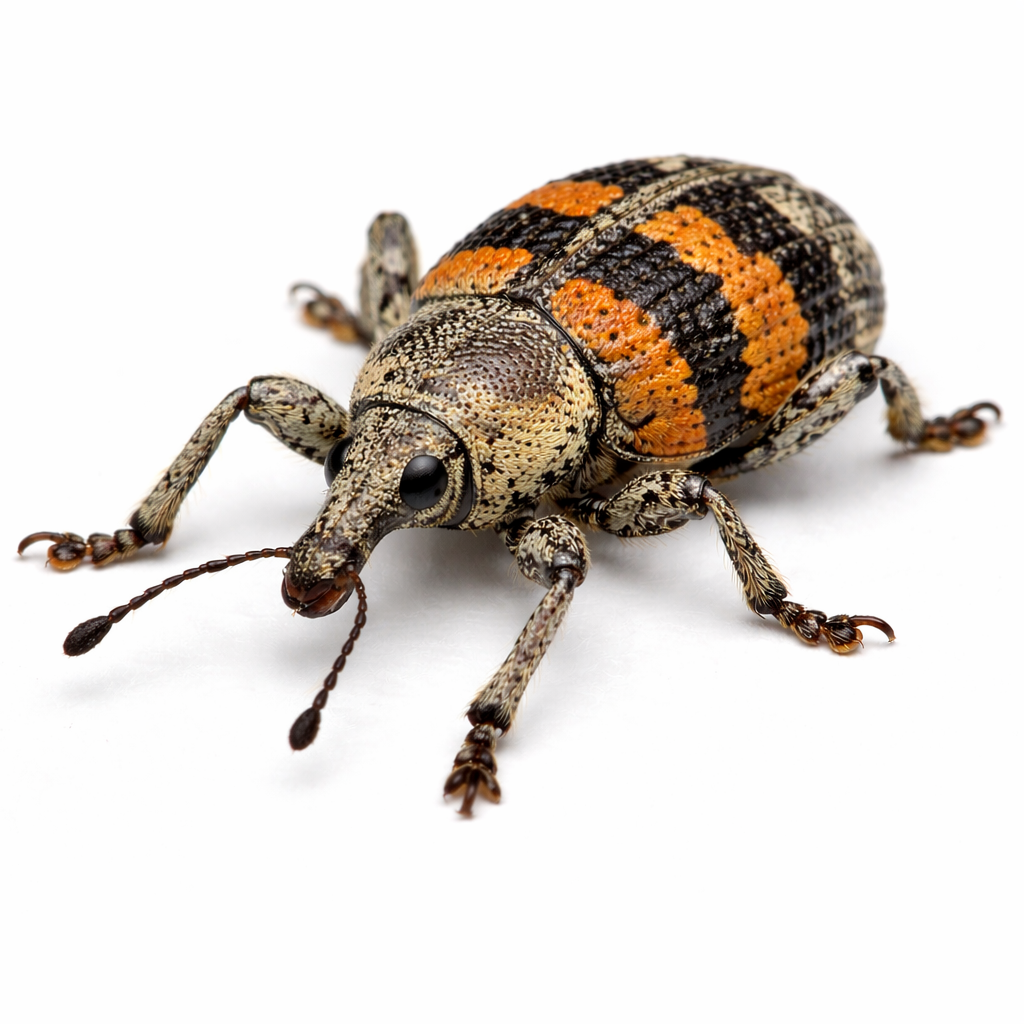
Native weevil that feeds on wattle and related plant species.
The Wattle Pig Weevil is a native Australian species commonly associated with wattles (Acacia species) and other native vegetation throughout Queensland. Adult weevils feed on leaves and young shoots while their larvae develop within the natural environment, forming part of the ecological processes that support healthy bushland. Although they may occasionally cause minor feeding damage to ornamental wattles, they are rarely considered significant garden or agricultural pests. Their presence is generally an indication of healthy native vegetation rather than a problem requiring treatment. Homeowners growing native plants should appreciate these weevils as part of Australia’s unique insect fauna. Professional pest management is rarely required unless unusually large populations are affecting valuable ornamental or commercial plantings.