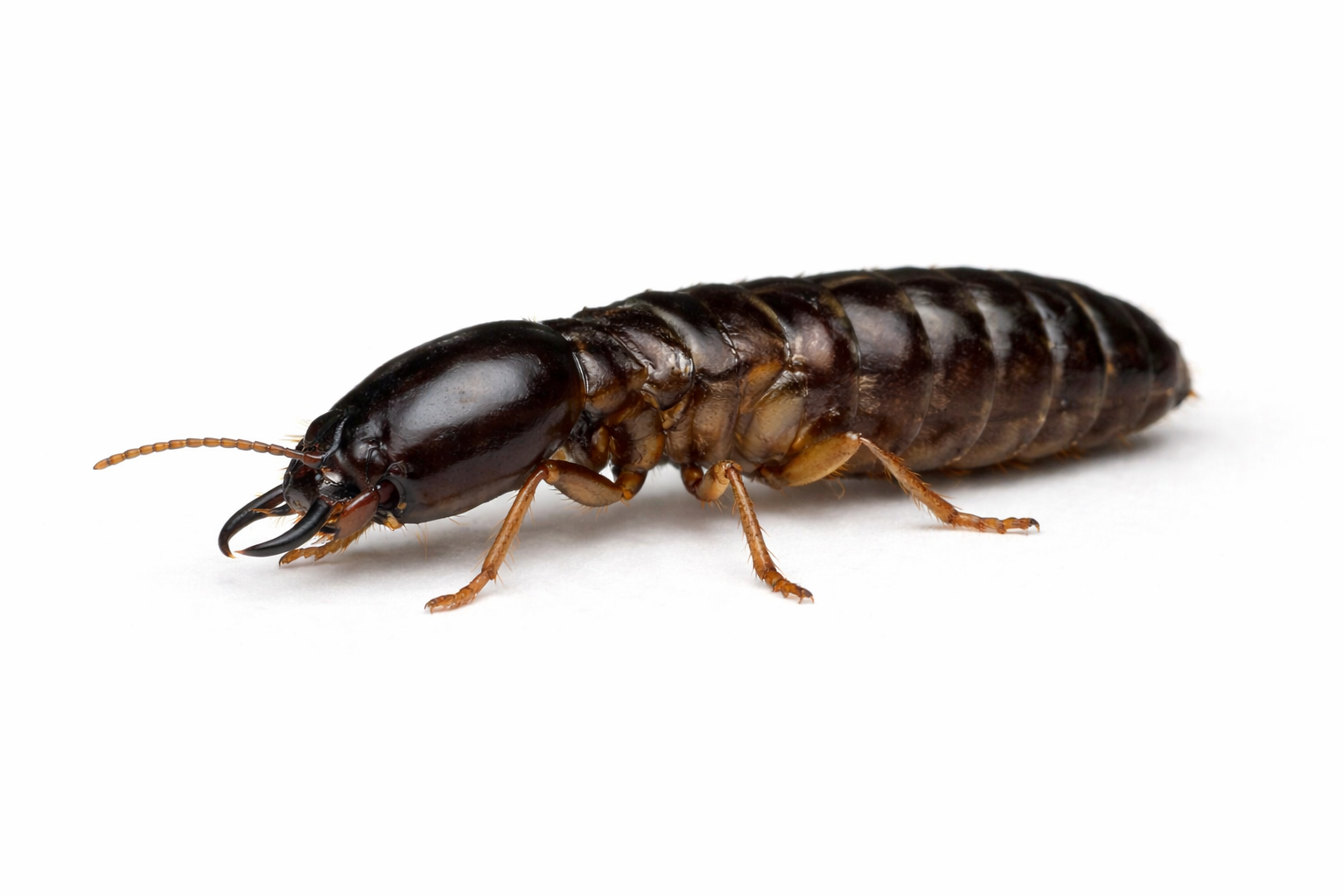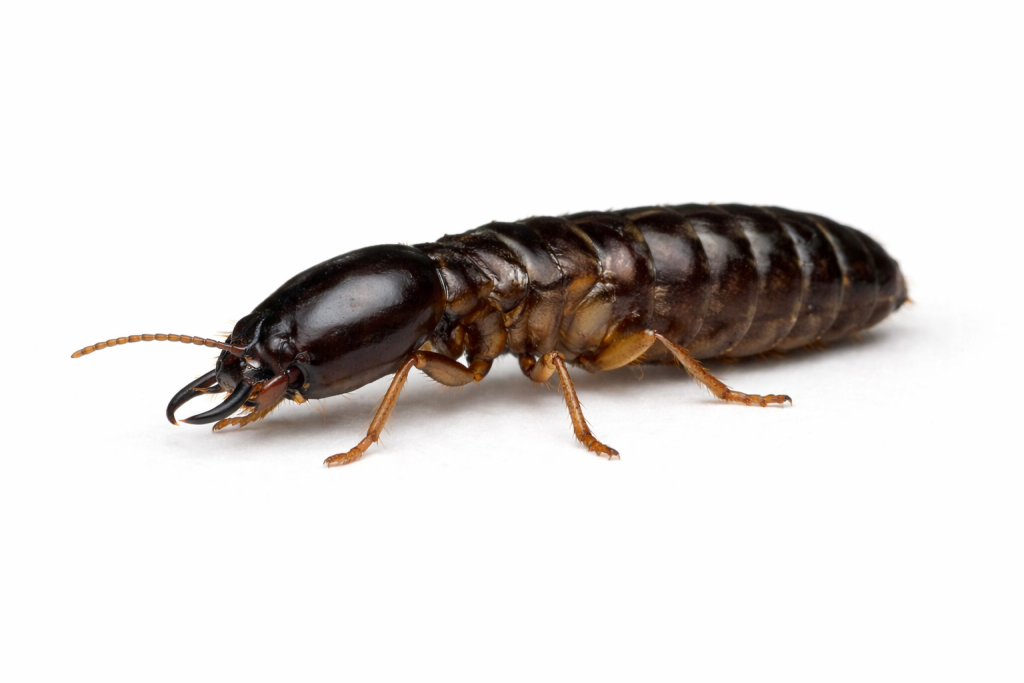
Reproductive male termite responsible for colony breeding.
The King Termite is the primary male reproductive within a termite colony and remains with the Queen throughout the life of the colony. After the initial mating flight, the King and Queen establish a new nest together and continue producing offspring that eventually develop into workers, soldiers and future reproductives. Unlike worker termites, the King does not damage timber or leave the nest to forage for food. He spends his entire life inside the protected colony where his sole role is reproduction. Homeowners will rarely see a King Termite because he remains hidden deep within the nest. While the King himself is not responsible for structural damage, his presence confirms an active termite colony capable of producing thousands or even millions of termites. Professional termite inspections are essential to locate and eliminate the entire colony before significant property damage occurs.
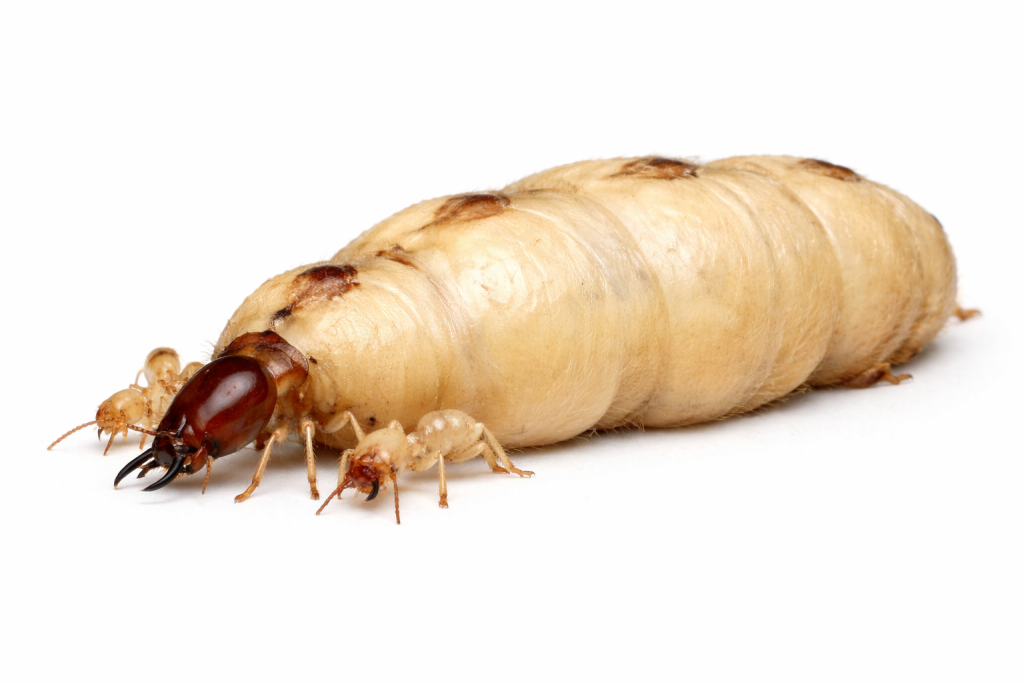
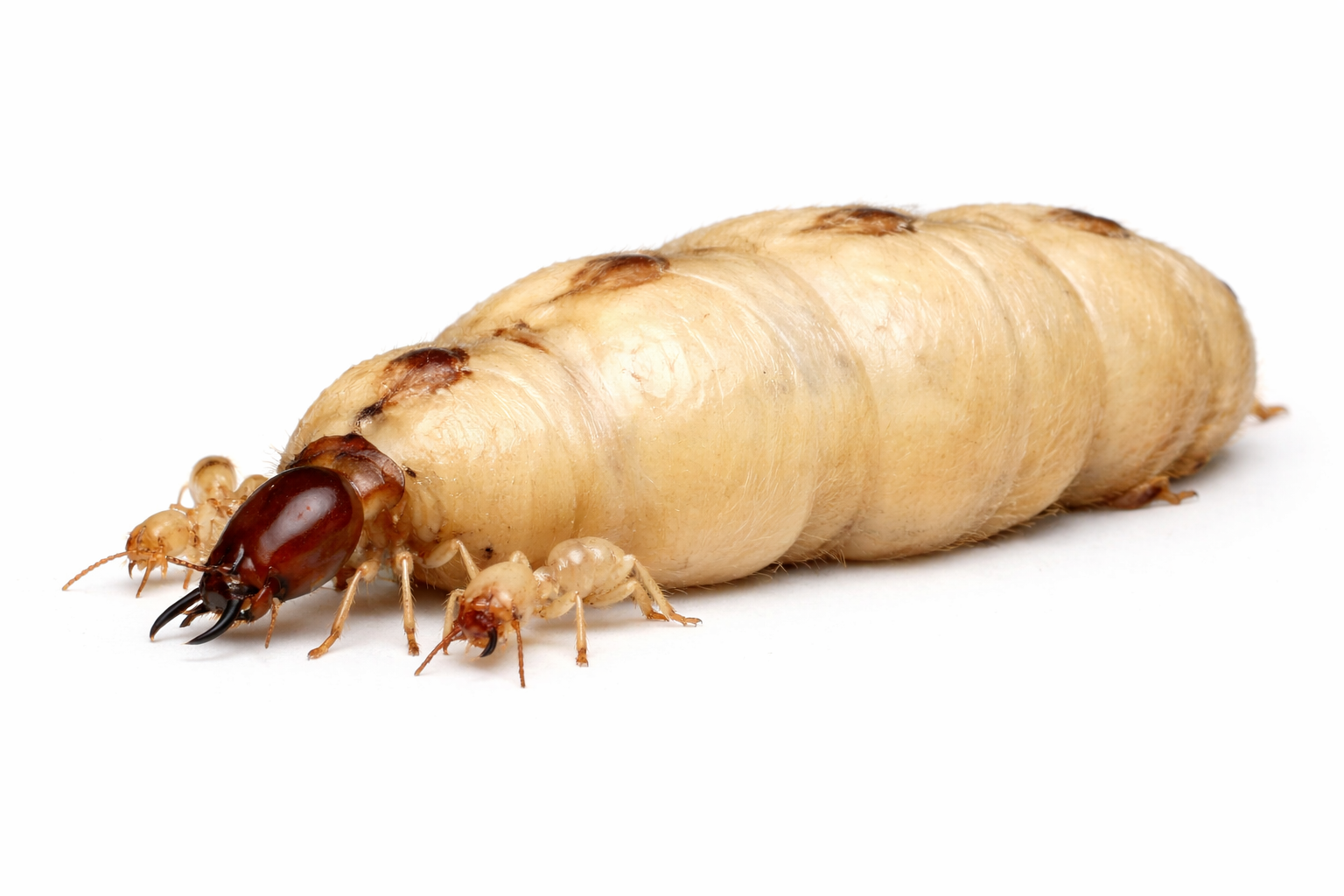
Primary reproductive termite that produces eggs for the colony.
The Queen Termite is the heart of every termite colony and is responsible for producing the eggs that allow the colony to grow and survive. Mature queens can live for many years and produce thousands of eggs each day, supporting colonies that may eventually contain hundreds of thousands or even millions of termites. Hidden deep within the nest and protected by worker and soldier termites, the Queen is rarely seen during normal infestations. Although she does not feed on timber herself, the workers she produces are responsible for extensive structural damage to homes and buildings. Because eliminating only the visible termites will not stop the colony, successful termite management focuses on destroying the Queen and the colony supporting her. Professional termite treatment is essential to achieve complete colony elimination and protect the property from ongoing damage.
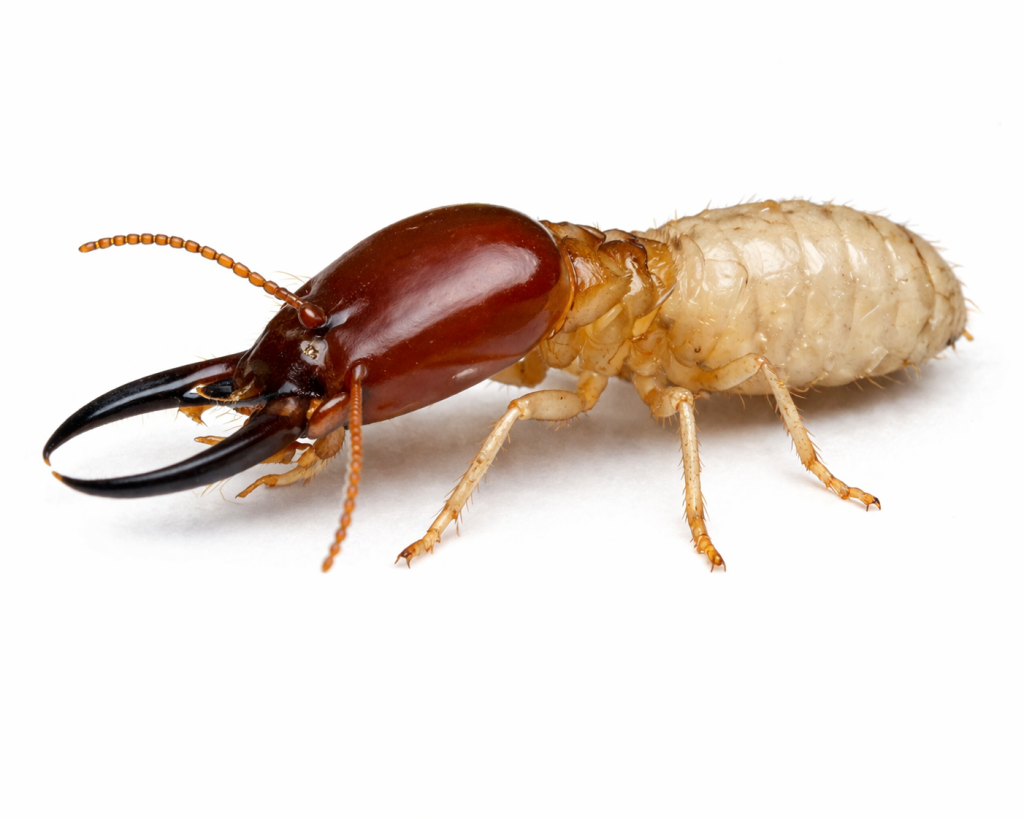
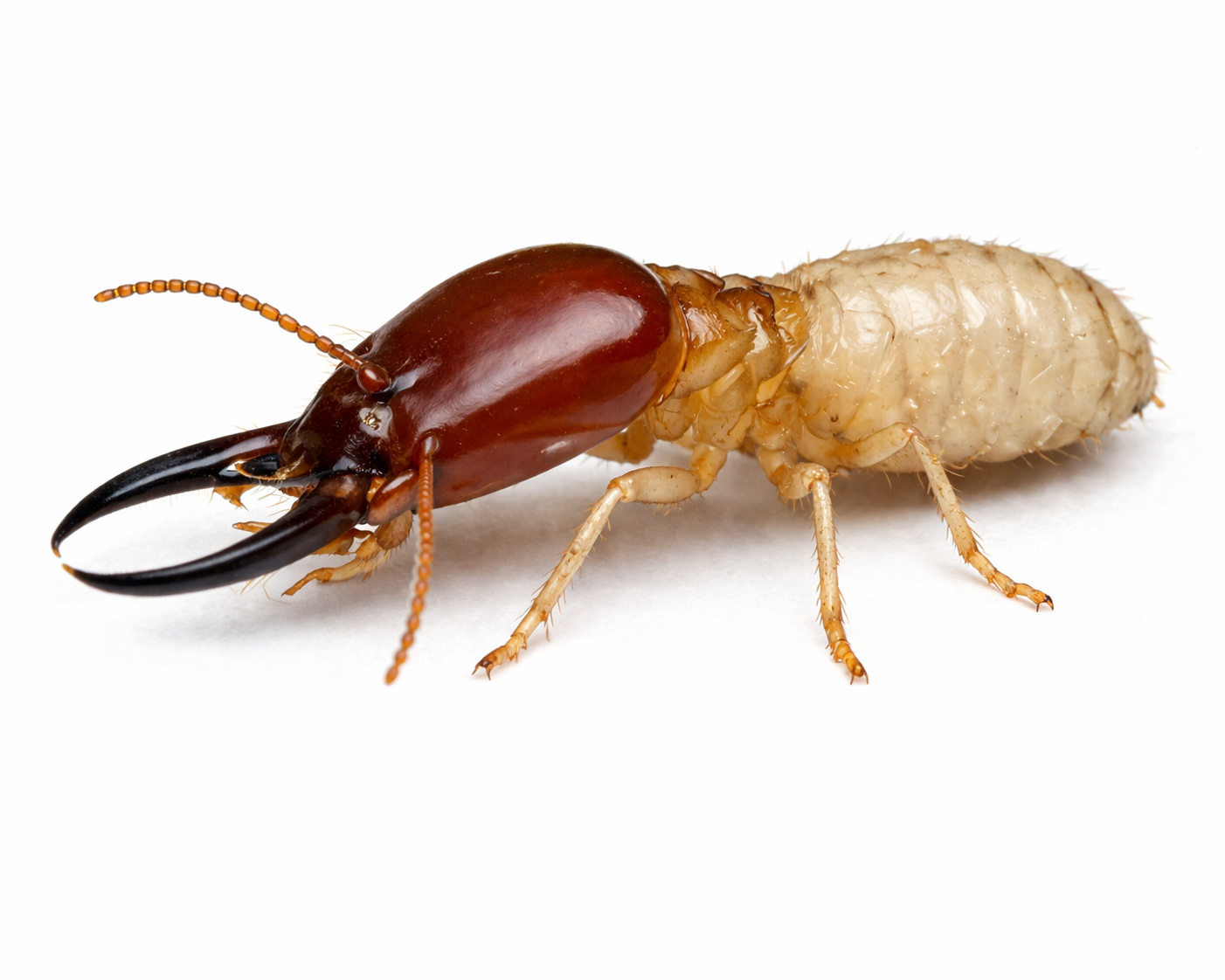
Termite caste responsible for defending the colony.
Soldier Termites are responsible for protecting the termite colony from ants, predators and other threats. They are easily recognised by their enlarged heads and powerful jaws, which are specially adapted for defending the nest rather than feeding on timber. Unlike Worker Termites, Soldiers cannot feed themselves and rely entirely on workers to provide nourishment. Homeowners may occasionally notice Soldier Termites when damaged timber is disturbed, as they quickly move into defensive positions to protect the colony. Their presence is a strong indication of an active termite infestation nearby. While Soldier Termites do not directly cause structural damage, they are an important part of a healthy colony capable of causing significant destruction through its worker population. Professional termite inspections are recommended whenever Soldier Termites are discovered to determine the extent of the infestation and implement an appropriate treatment program.
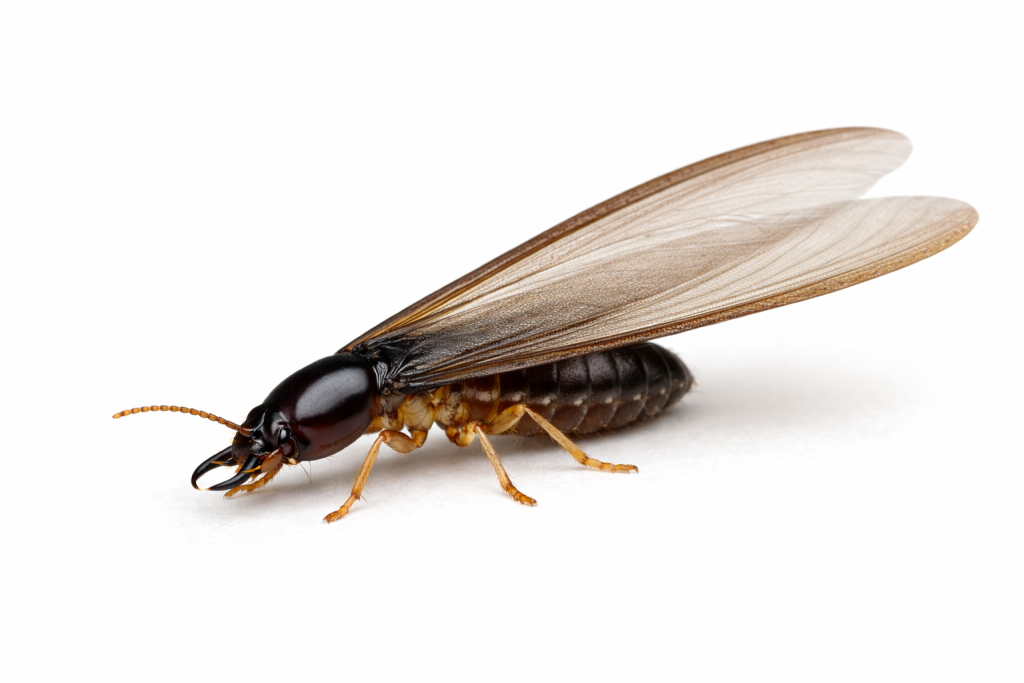
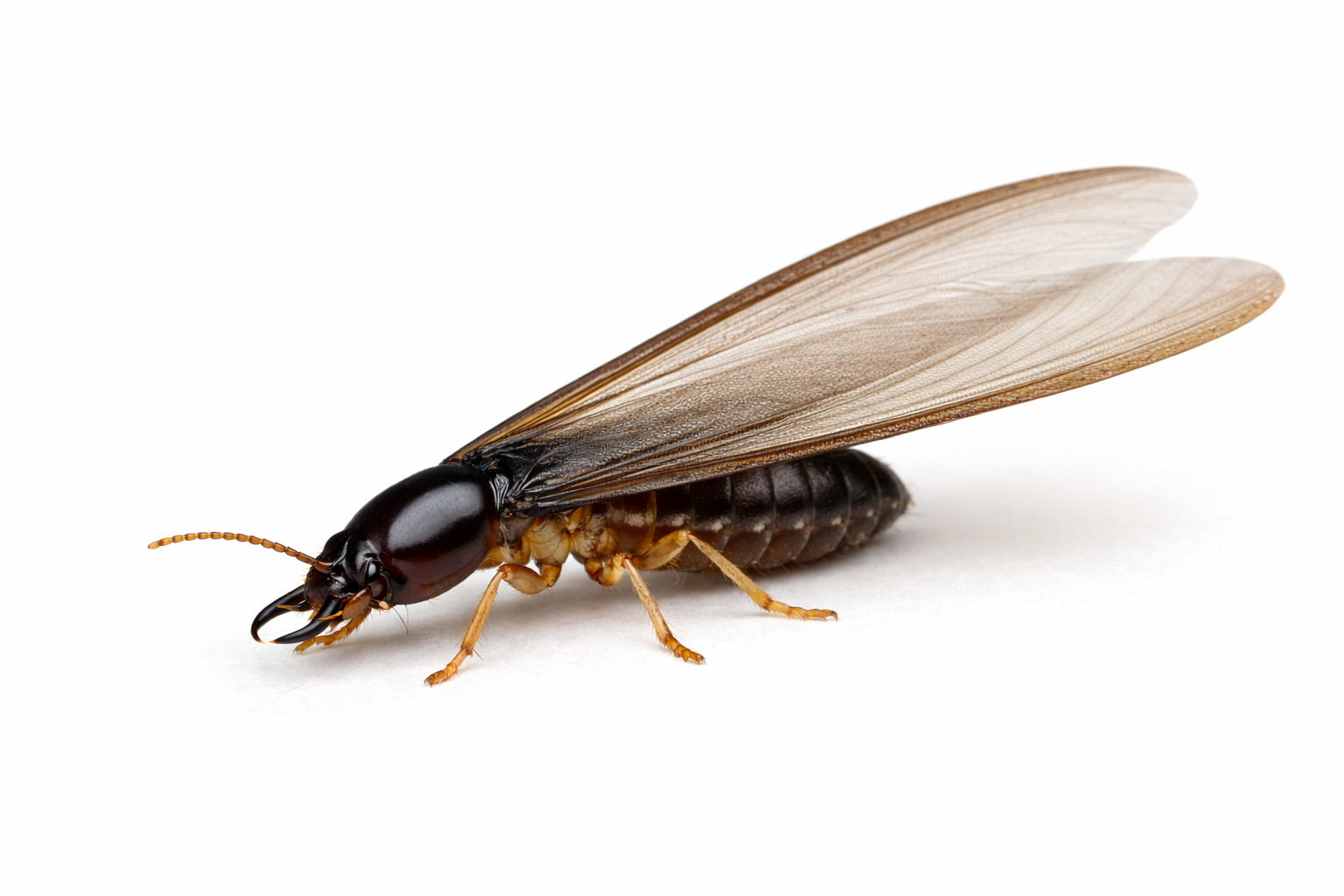
Flying termite that leaves the colony to start new nests.
Winged Reproductive Termites, often called Alates or Flying Termites, are the future Kings and Queens of new termite colonies. During warm, humid conditions, large numbers leave mature nests in spectacular swarms to mate and establish new colonies. Homeowners frequently mistake these flying termites for winged ants, making correct identification extremely important. A swarm inside or around a building often indicates that an active termite colony is located nearby and should never be ignored. Although the flying termites themselves do not damage timber, they represent the breeding stage of one of Australia’s most destructive structural pests. If Winged Reproductive Termites are seen emerging from a home or building, a professional termite inspection should be arranged immediately to determine the source of the infestation and prevent costly structural damage.
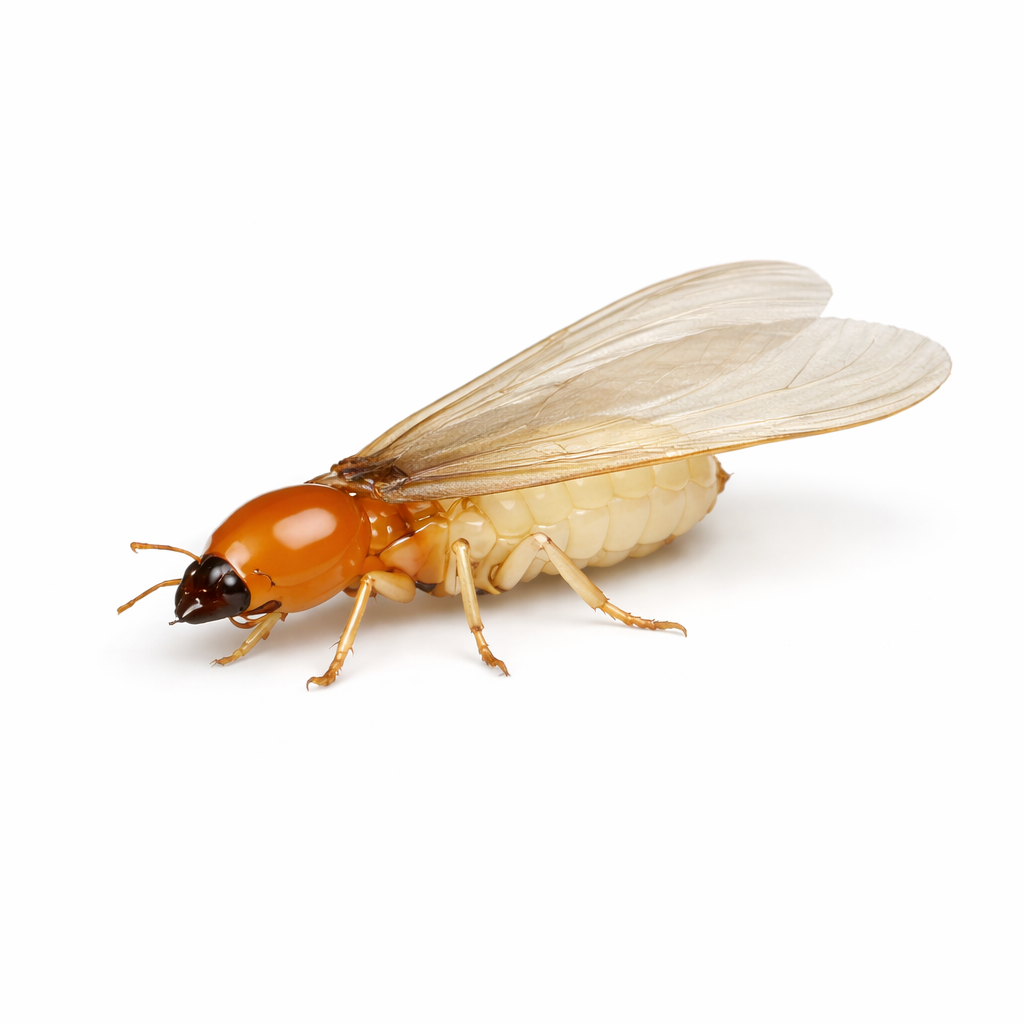
Swarming termite commonly mistaken for flying ants.
Winged Termites are the reproductive members of a termite colony and are most commonly seen during seasonal swarming events following warm weather and rainfall. They are frequently confused with flying ants, but unlike ants, termites have straight antennae, equal-length wings and a broad waist. Finding Winged Termites indoors is often one of the earliest visible warning signs of a hidden termite infestation within or beneath a building. While the winged insects themselves do not consume timber, their appearance indicates that a mature colony has reached the reproductive stage and may already be causing structural damage. Homeowners should never ignore termite swarms or discarded wings around windows, doors or light fittings. Prompt professional inspection and treatment provide the best opportunity to detect hidden termite activity before serious property damage occurs.
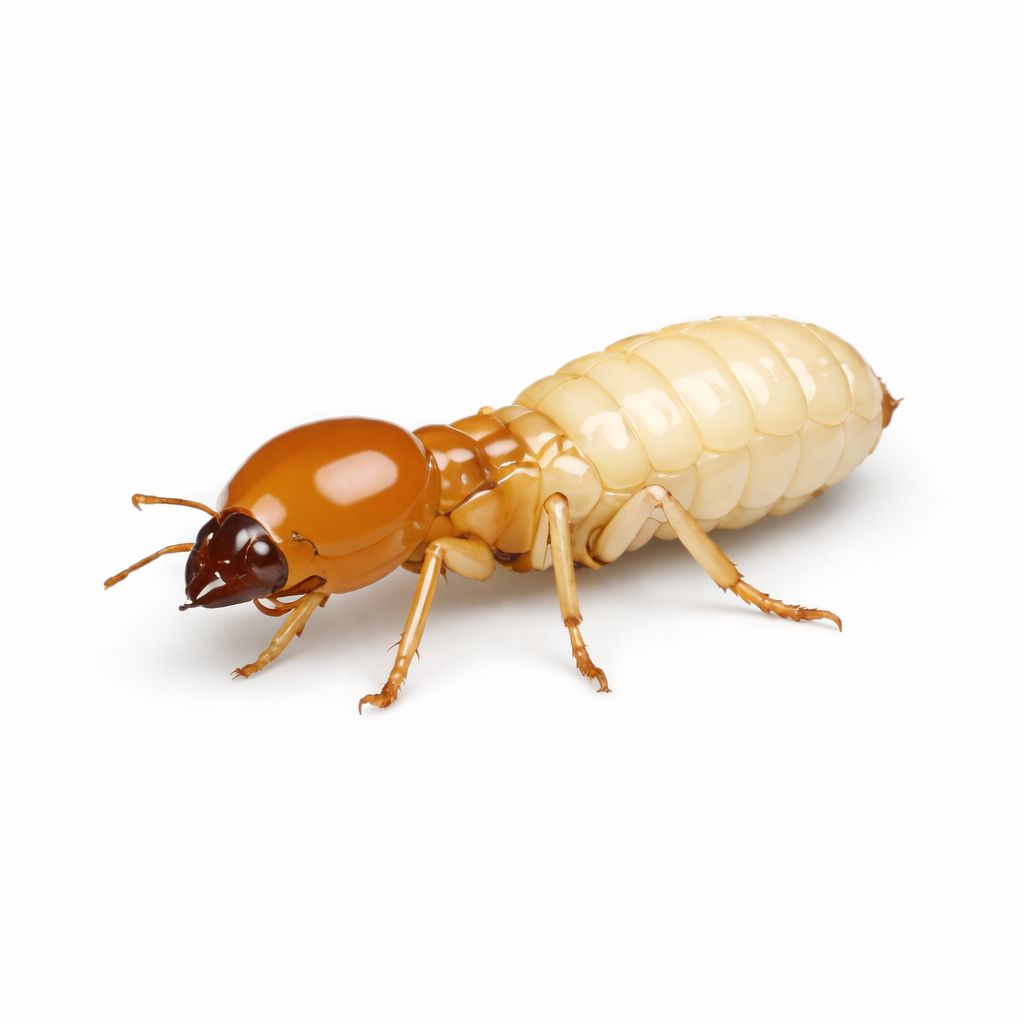
Termite caste that feeds the colony and damages timber structures.
Worker Termites are the most numerous members of a termite colony and are responsible for virtually all timber damage associated with termite infestations. These pale, soft-bodied insects constantly search for cellulose found in timber, wall framing, flooring, furniture and other wooden structures while also feeding and caring for the rest of the colony. Because they work hidden inside timber, walls and underground tunnels, extensive structural damage may occur long before homeowners become aware of an infestation. Common warning signs include hollow-sounding timber, tight-fitting doors or windows, mud shelter tubes and bubbling paint surfaces. Worker Termites never sleep and continue feeding twenty-four hours a day, making early detection essential. Professional termite inspections, monitoring systems and proven treatment methods remain the most effective way to protect homes from costly termite damage and eliminate active colonies before major structural repairs become necessary.