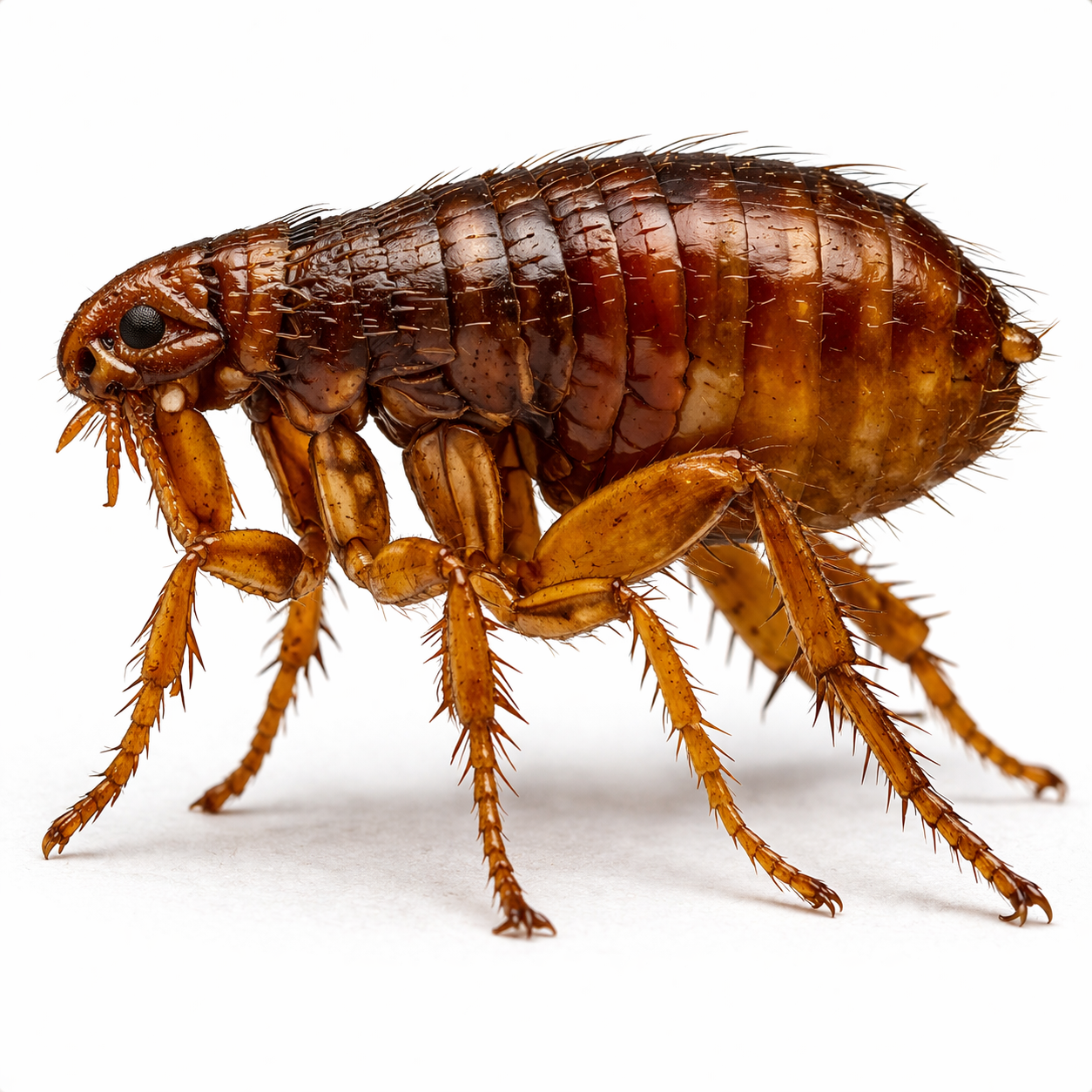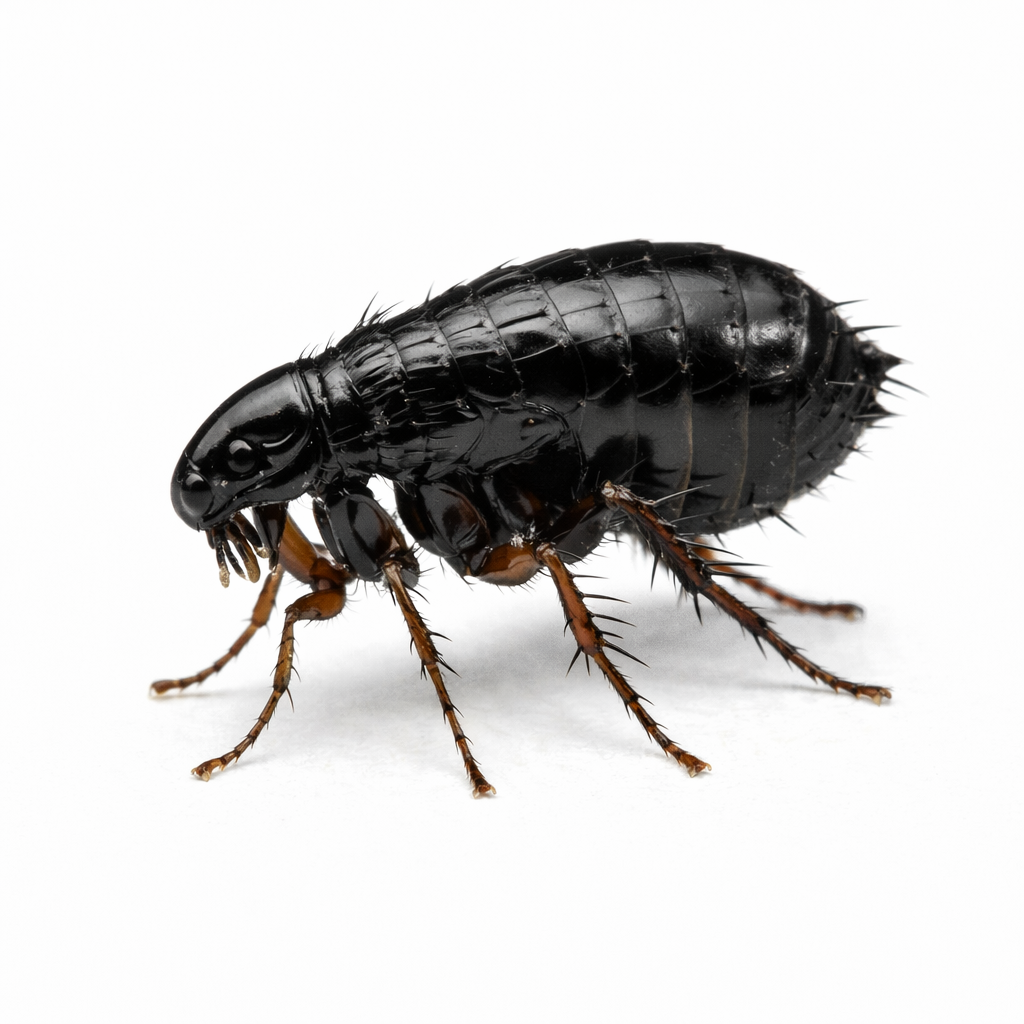
Parasitic flea that feeds on birds and can infest nests and homes.
Bird Fleas are parasitic insects that normally feed on wild birds and are commonly associated with nests located in roof voids, wall cavities, chimneys and eaves. Problems often begin after young birds leave the nest, causing hungry fleas to migrate into nearby living areas in search of a new host. Homeowners may suddenly notice flea bites without realising the source is an abandoned bird nest rather than household pets. Bird Fleas can survive for extended periods in nesting material and surrounding areas, making infestations difficult to eliminate if the nest remains in place. Successful treatment requires locating and removing the nesting source before applying appropriate pest control measures. Professional pest management is recommended where Bird Fleas have spread into homes, as simply treating the fleas without addressing the nest will usually result in the infestation returning.
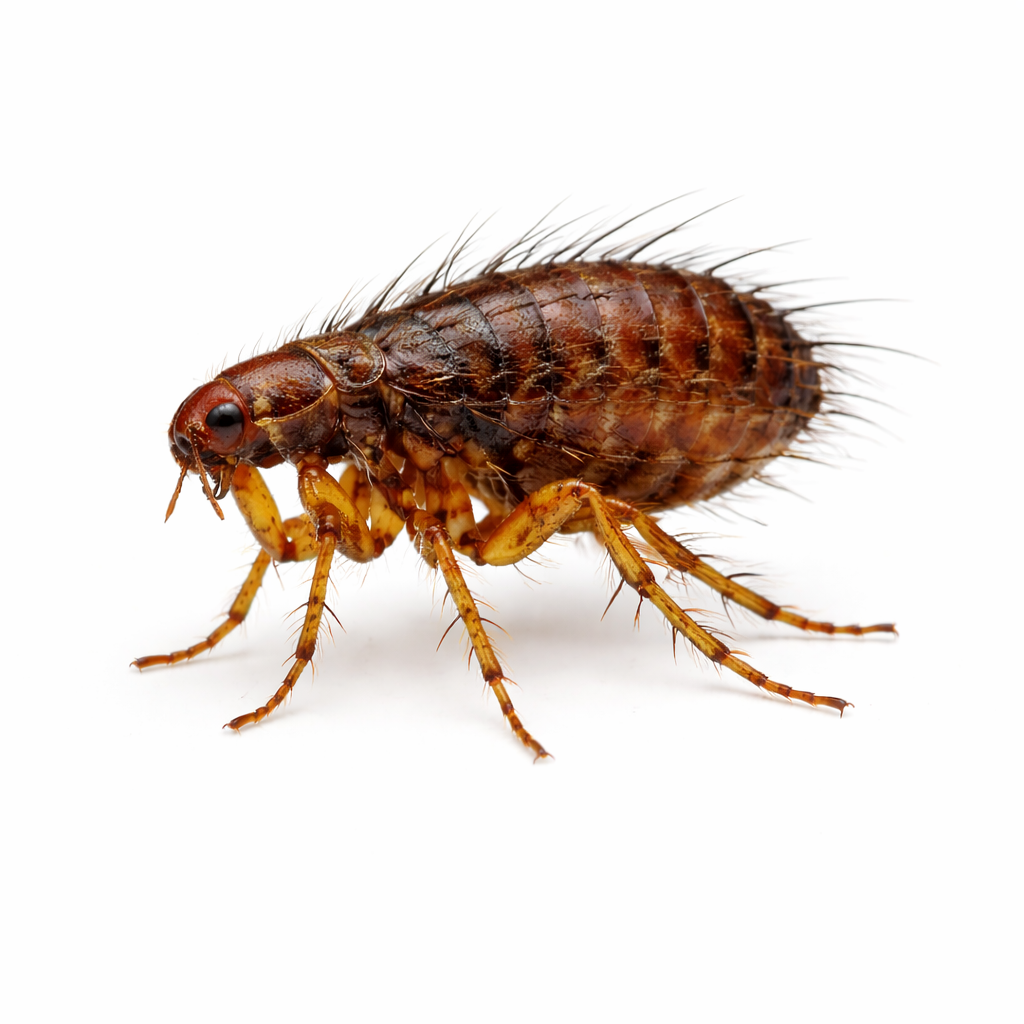
Common flea species that infests cats, dogs, and indoor areas.
Cat Fleas are the most common flea species found in Queensland and are responsible for the majority of flea infestations affecting both cats and dogs. Despite their name, they readily feed on a variety of animals and will also bite humans when given the opportunity. Adult fleas feed on blood while eggs, larvae and pupae develop within carpets, pet bedding, furniture and floor cracks, allowing infestations to grow rapidly inside homes. Flea bites can cause intense itching, allergic skin reactions and discomfort for both pets and people. Because only a small percentage of the flea population is visible as adults, treating pets alone rarely solves the problem. Effective control requires treating the entire environment as well as the animals themselves. Professional flea treatments target every stage of the flea life cycle, helping eliminate established infestations and significantly reducing the risk of reinfestation.
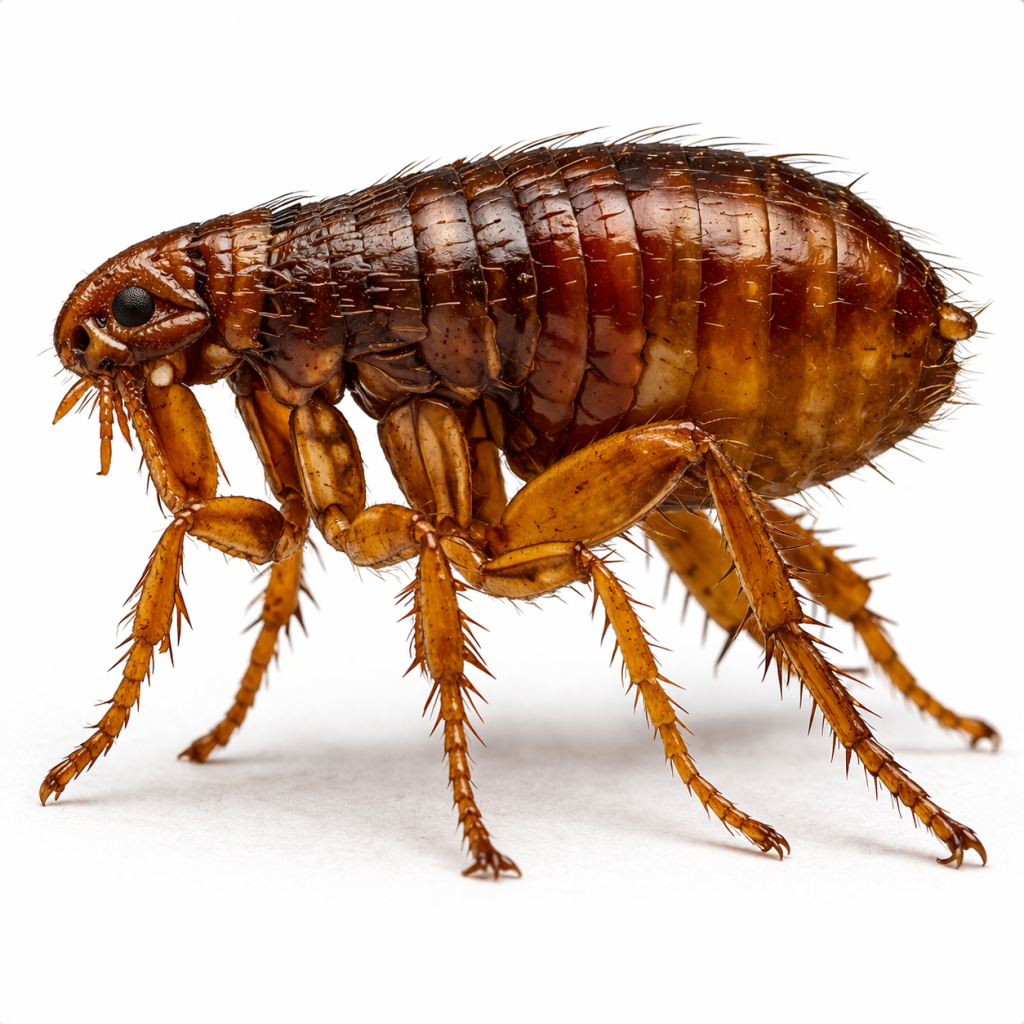
Blood-feeding flea that primarily infests dogs and surrounding areas.
Dog Fleas are blood-feeding parasites that primarily infest dogs but may also feed on cats, wildlife and humans when necessary. Adult fleas spend much of their time on the host while eggs fall into carpets, rugs, bedding and outdoor resting areas where immature fleas continue developing. Heavy infestations can cause constant scratching, skin irritation, allergic dermatitis and, in severe cases, anaemia in young or vulnerable animals. Fleas can also transmit tapeworms and other parasites between animals. Successful flea control involves much more than treating the pet itself, as the majority of the flea population usually exists within the surrounding environment. Thorough cleaning, regular pet treatment and professional pest management provide the most effective long-term solution for eliminating Dog Fleas and preventing recurring infestations throughout the home and yard.
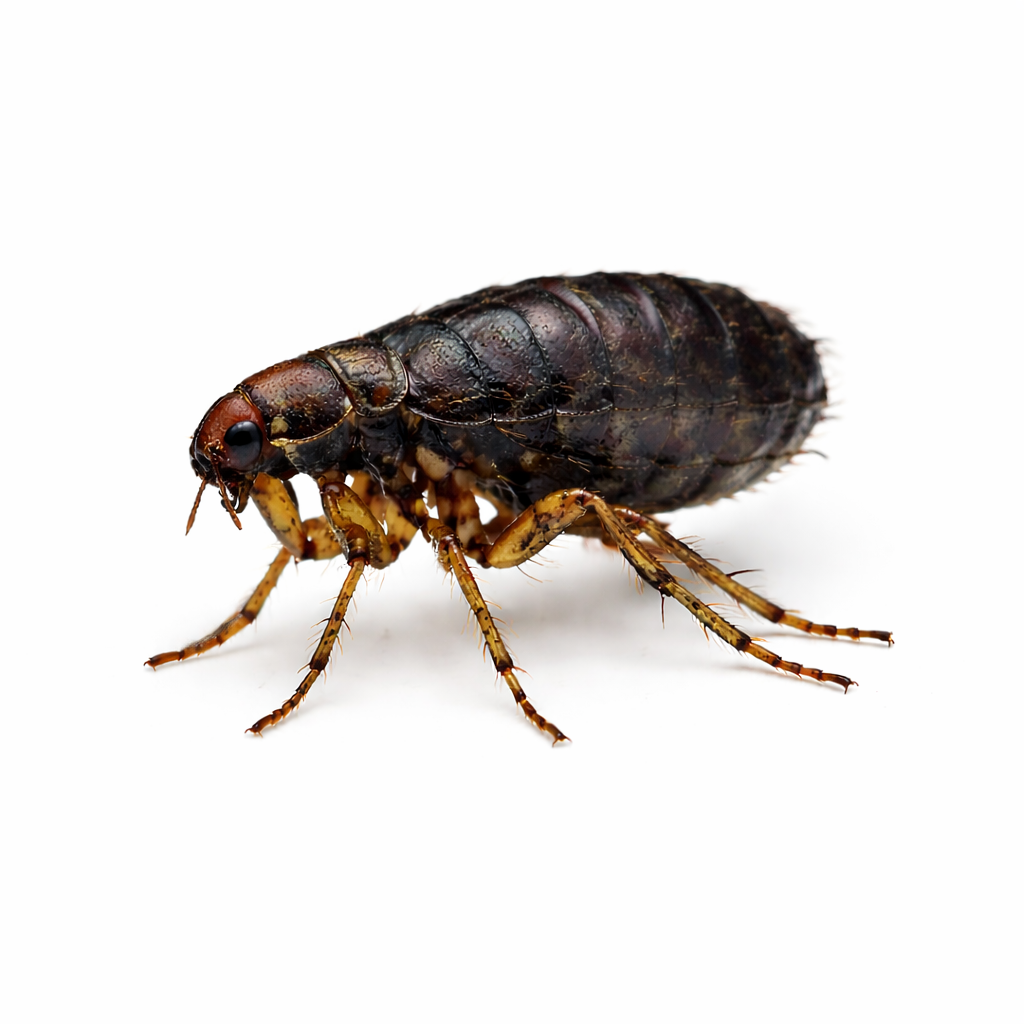
Flea species that feeds on humans and can live in bedding and carpets.
Human Fleas are blood-feeding insects capable of biting people, although they are far less common today than Cat Fleas, which are responsible for most flea problems encountered in homes. Human Fleas may be associated with poor sanitation, overcrowded living conditions or close contact with infested animals. They hide within bedding, carpets, furniture and floor coverings, emerging to feed on sleeping or resting occupants. Flea bites commonly appear as small, itchy red spots, often around the ankles and lower legs, and repeated bites may trigger allergic reactions in sensitive individuals. Accurate identification is important because effective treatment depends on confirming the source of the infestation. Professional pest control combines environmental treatment with advice on sanitation and host management to eliminate all stages of the flea life cycle and prevent future outbreaks.
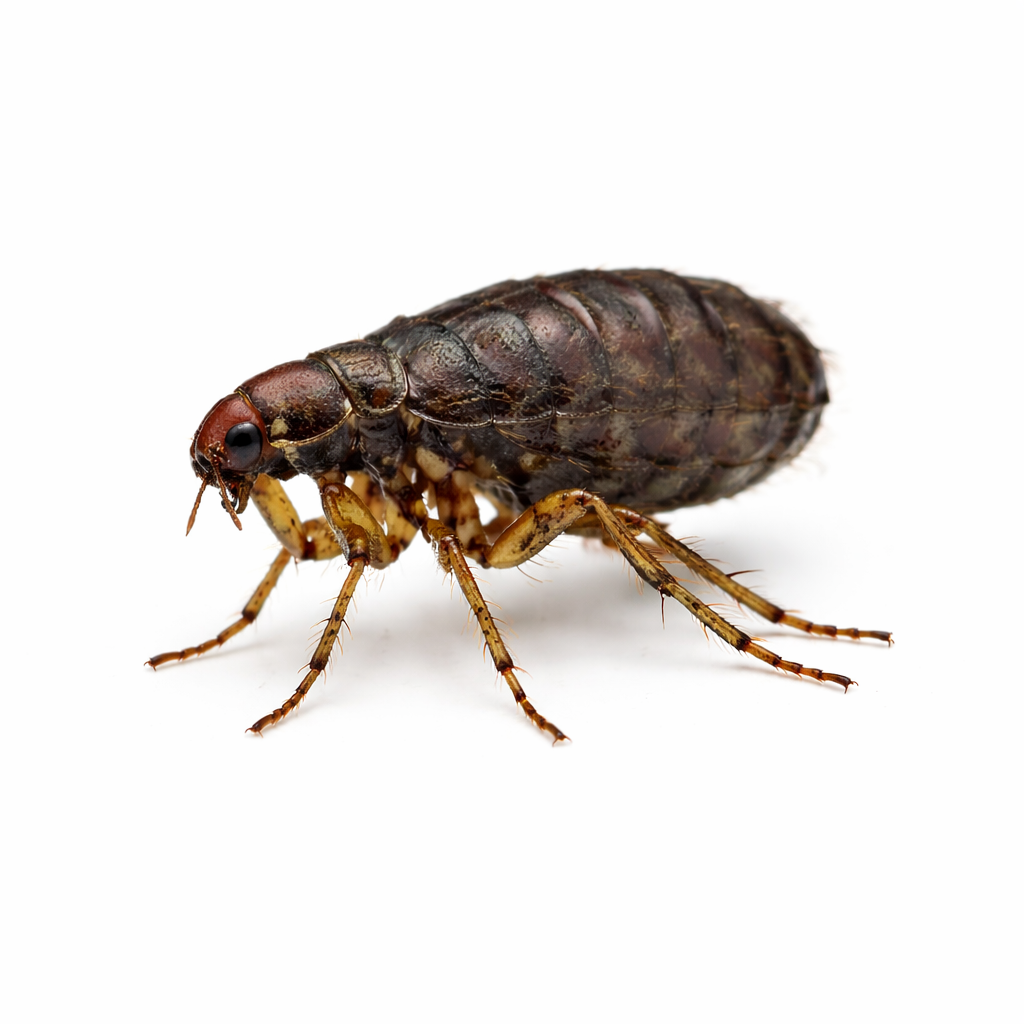
Flea species associated with rodents and capable of spreading disease.
The Oriental Rat Flea is primarily associated with rats and mice and is considered one of the most medically significant flea species because of its historical role in transmitting diseases between rodents. Although modern public health standards have greatly reduced these risks in Australia, infestations can still occur where rodent populations are established in homes, commercial buildings or rural properties. When rodent hosts die or leave an area, hungry fleas may begin biting people and domestic animals instead. The presence of Oriental Rat Fleas often indicates an underlying rodent problem that requires immediate attention. Effective control involves eliminating both the flea infestation and the rodents responsible for supporting it. Professional pest management provides an integrated approach by treating the flea population while implementing proven rodent control strategies to prevent the problem from recurring.
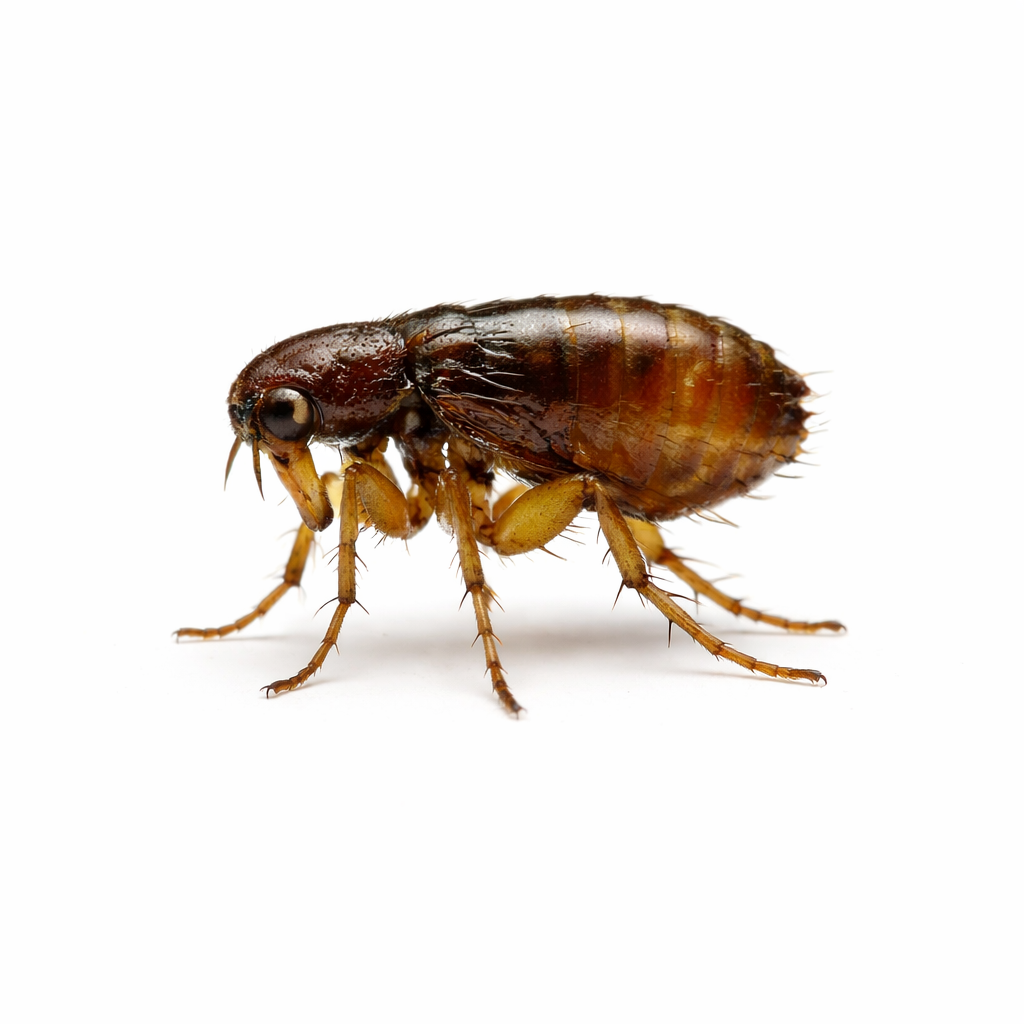
Flea that attaches firmly to hosts such as poultry and animals.
Stickfast Fleas are unusual parasites that attach firmly to their host for extended periods rather than moving freely through the animal’s coat. They commonly affect poultry, dogs, cats and other animals, attaching around the face, ears, comb, wattles and eyes where they feed continuously on blood. Heavy infestations can cause irritation, skin damage, infection and reduced health, particularly in young or weakened animals. Stickfast Fleas are most often encountered on rural properties, poultry farms and households keeping chickens or outdoor animals. Early treatment is important because attached fleas remain firmly embedded and continue feeding until removed or treated. Professional pest control, combined with appropriate veterinary care where required, provides the most effective method of eliminating Stickfast Fleas and reducing the risk of reinfestation in animal housing and surrounding environments.