Large cockroach species commonly found in warm, damp environments.
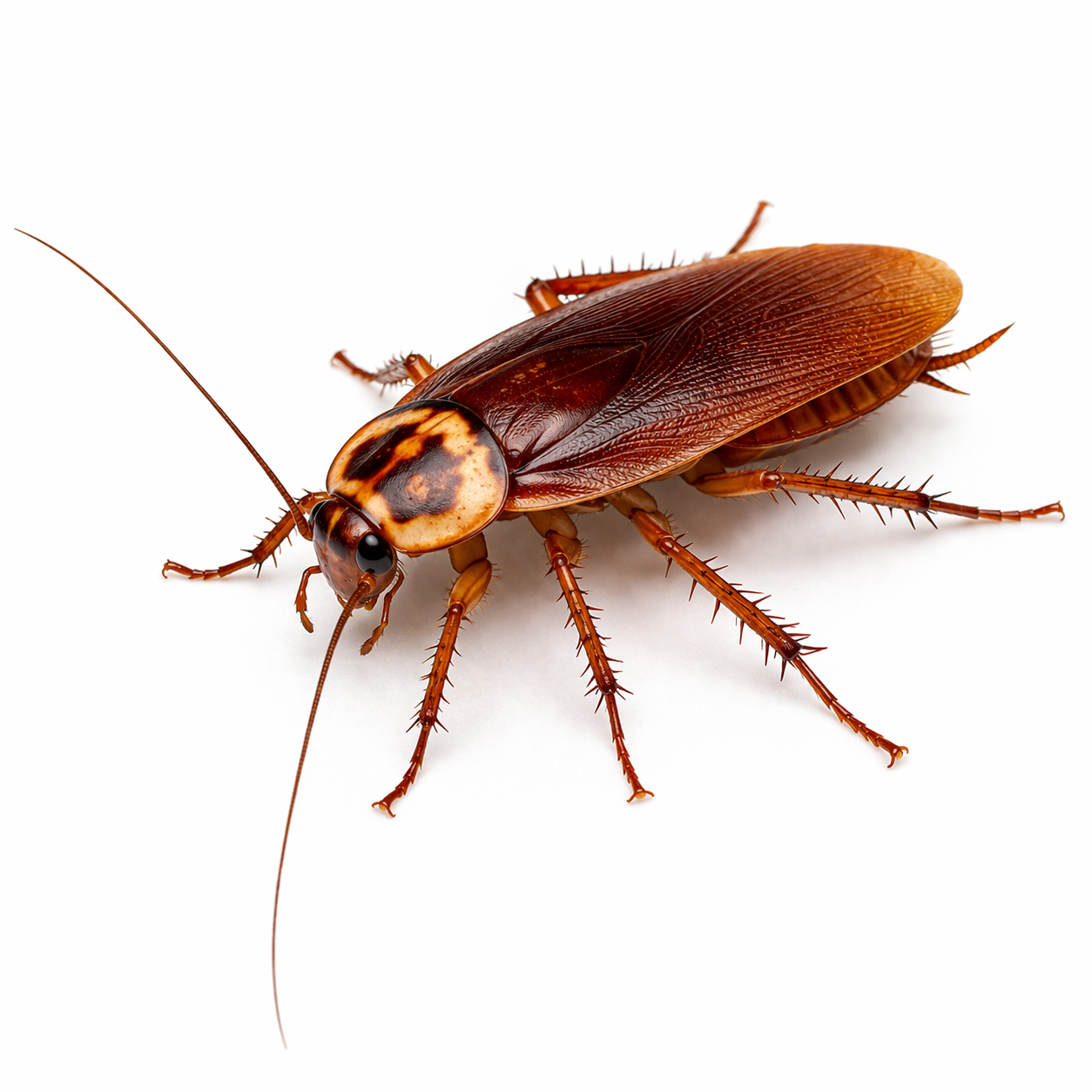
The American Cockroach is one of the largest cockroach species commonly found in Queensland and is easily recognised by its reddish-brown body and large size. It prefers warm, humid environments and is frequently found in drains, sewers, roof voids, basements, subfloors and commercial buildings. Although it usually lives outdoors, it will readily enter homes and businesses in search of food, water and shelter. American Cockroaches can contaminate food preparation areas with bacteria and other disease-causing organisms carried on their bodies and legs. They may also trigger allergies and asthma in sensitive individuals through their droppings and shed skins. Because these cockroaches are excellent climbers and can travel considerable distances through drainage systems, infestations often require more than simple household sprays. Professional pest management focuses on identifying breeding areas, eliminating harbourage sites and applying targeted treatments that provide long-term control while helping prevent future infestations.
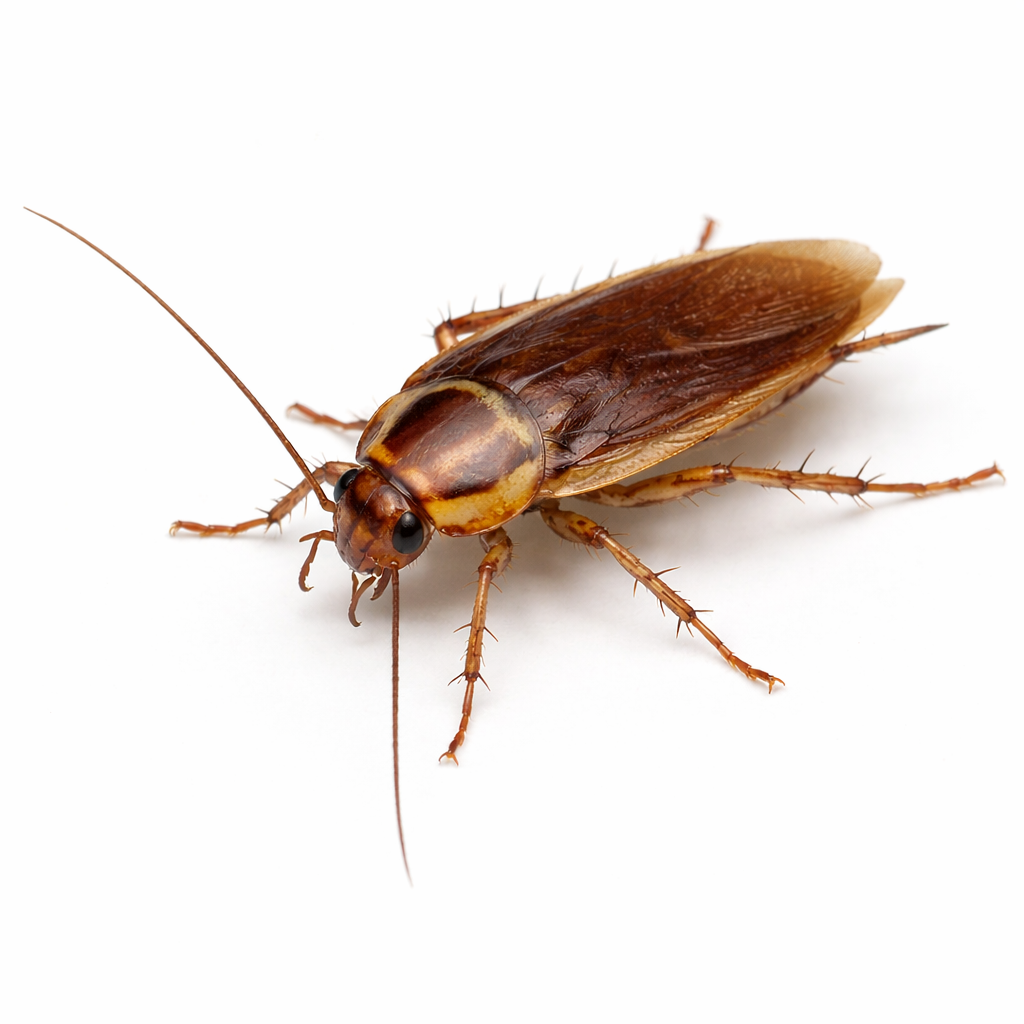
Outdoor cockroach species that can enter homes in search of food.
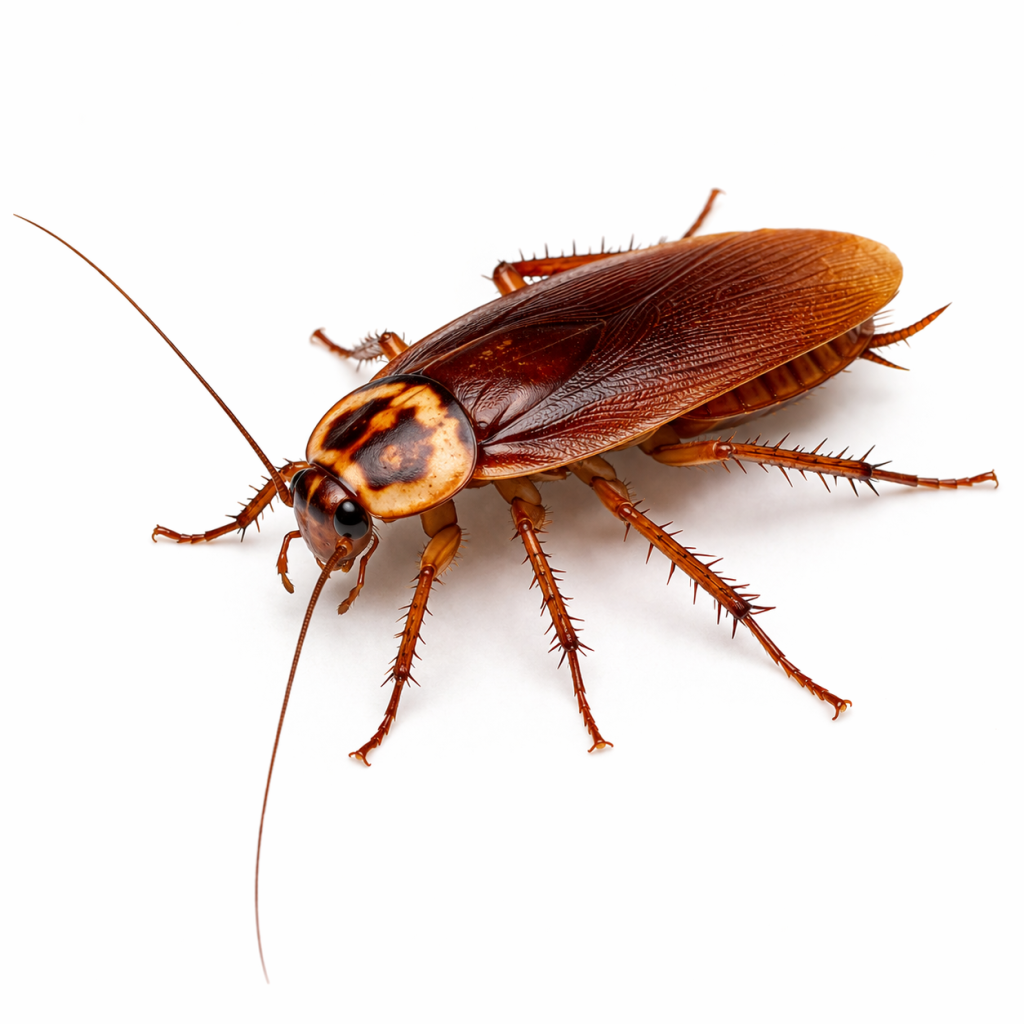
The Australian Cockroach is a large, fast-moving species commonly found throughout Queensland in gardens, sheds, compost areas and around vegetation. Although it prefers outdoor environments, it frequently enters homes, restaurants and commercial premises while searching for food, water or shelter, particularly during hot or wet weather. This species is often mistaken for the American Cockroach but can be identified by the distinctive yellow markings on its thorax and wings. Australian Cockroaches are capable of contaminating food and food preparation surfaces with bacteria, making them an unwelcome visitor in any property. Their ability to breed in warm, sheltered locations allows populations to increase rapidly if suitable conditions exist. Reducing moisture, sealing entry points and maintaining good sanitation can help minimise activity, while professional pest control provides the most effective solution for eliminating established infestations and preventing their return.
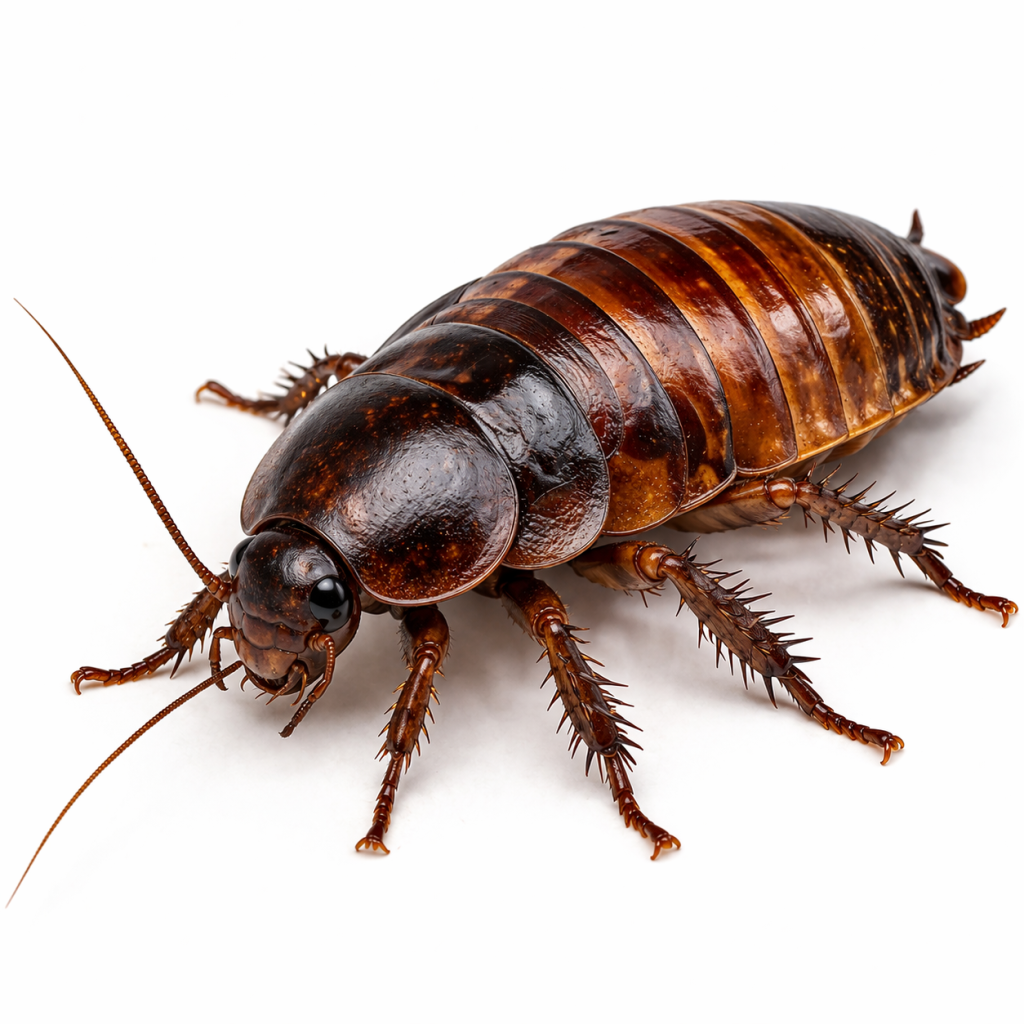
Ground-dwelling cockroach that lives in soil and leaf litter.
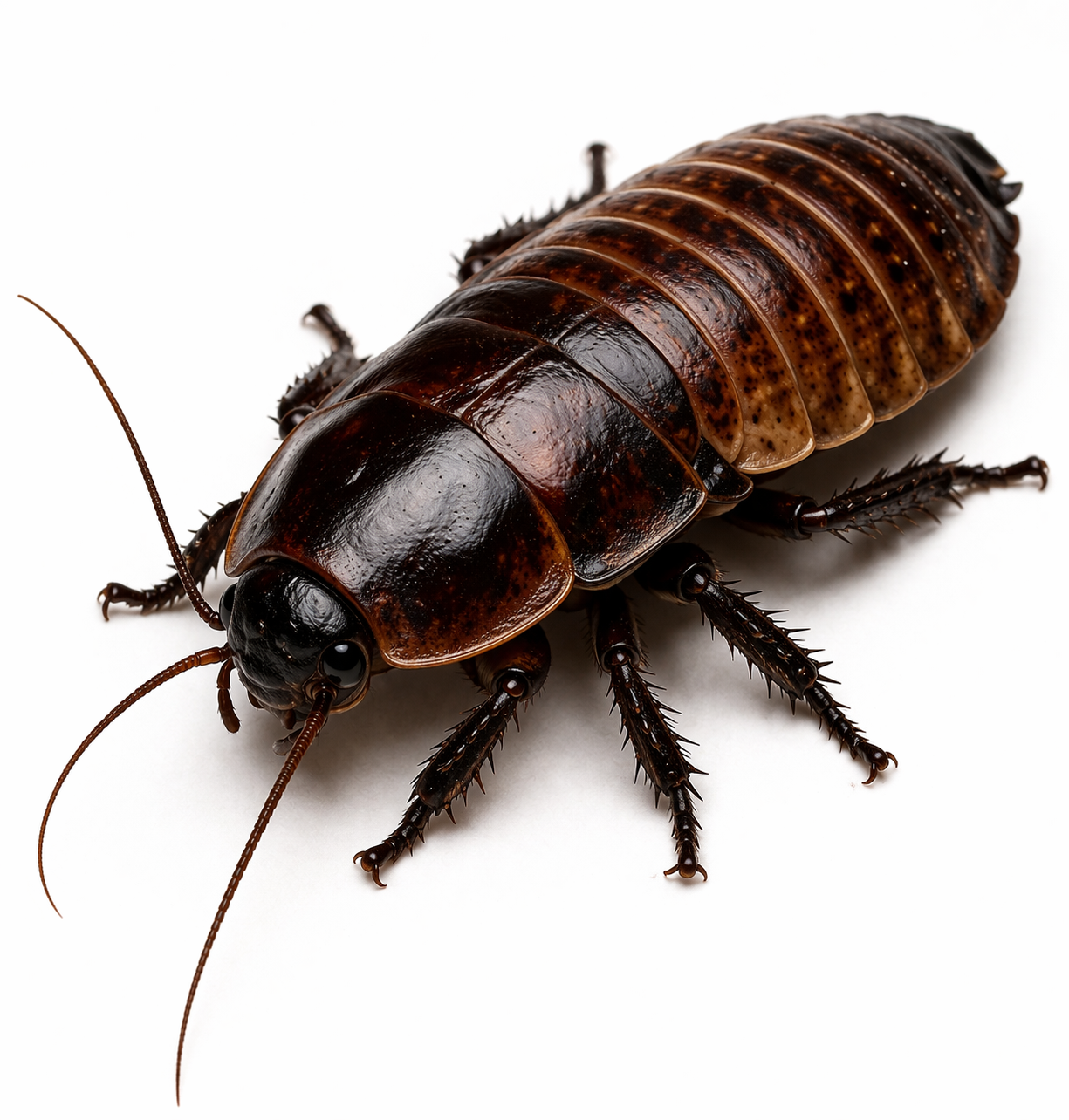
Burrowing Cockroaches are native Australian insects that spend most of their lives beneath the soil, feeding on decaying leaves, organic matter and other natural plant material. Unlike common household cockroaches, they rarely enter homes or commercial buildings and are not considered significant structural or hygiene pests. These cockroaches play an important role in breaking down organic matter and improving soil health within natural ecosystems. They are commonly found beneath logs, mulch, leaf litter and garden beds throughout Queensland. Because they remain outdoors and avoid human contact whenever possible, Burrowing Cockroaches rarely require any form of pest control treatment. If they are occasionally seen inside a home, it is usually accidental and they can simply be removed and released outdoors. Correct identification is important to distinguish these harmless native insects from pest cockroach species that may require professional management.
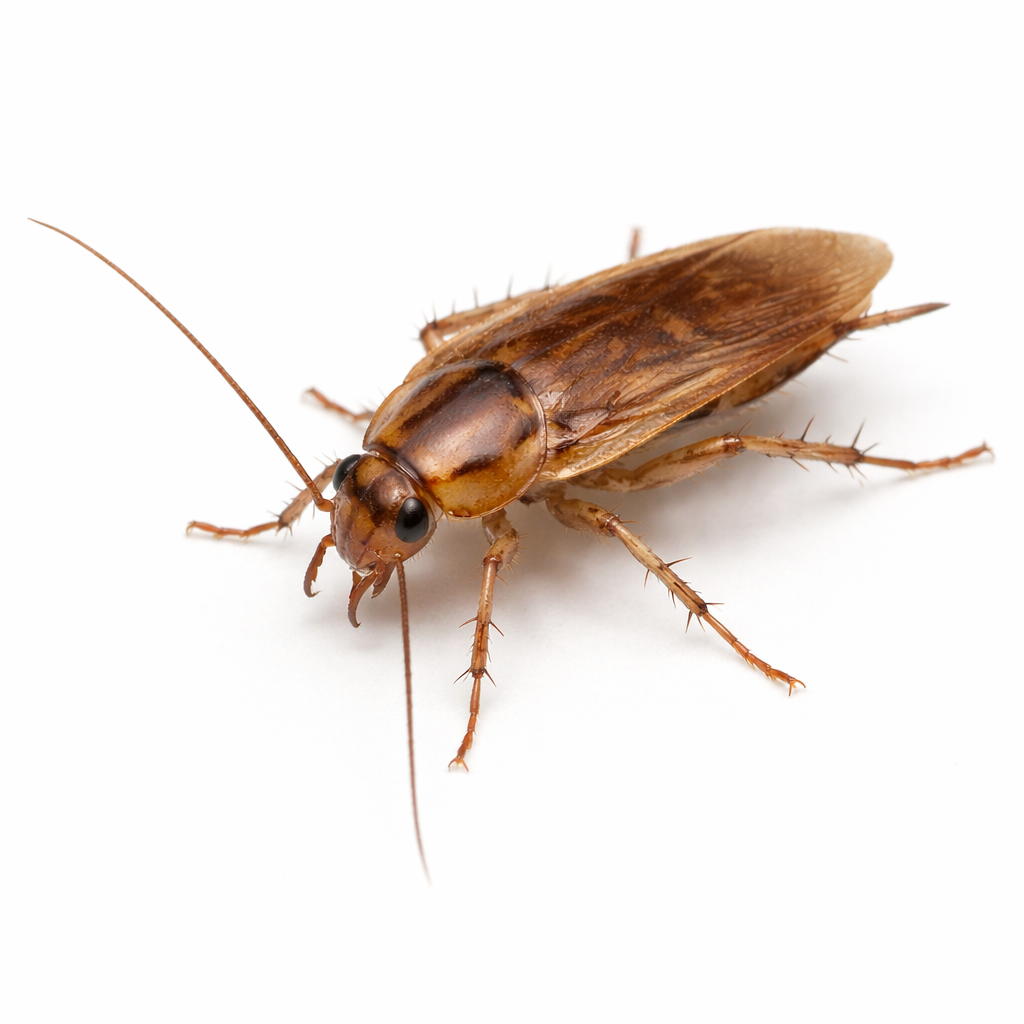
Small indoor cockroach known for rapid breeding in kitchens and bathrooms.
The German Cockroach is one of the most troublesome indoor pest species found in homes, restaurants, hotels and commercial kitchens throughout Queensland. Small in size but extremely fast breeding, a single infestation can develop into thousands of cockroaches within a relatively short period if left untreated. German Cockroaches thrive in warm, humid environments close to food and water, commonly hiding inside kitchen cupboards, behind appliances, under sinks and within wall cavities. They are known to spread bacteria, contaminate food and trigger allergies and asthma through their droppings, saliva and shed skins. Because they reproduce rapidly and hide in extremely small spaces, supermarket insect sprays rarely eliminate an infestation completely. Professional pest control is strongly recommended, using targeted gel baits, insect growth regulators and specialised treatments designed to eliminate both active cockroaches and future generations.
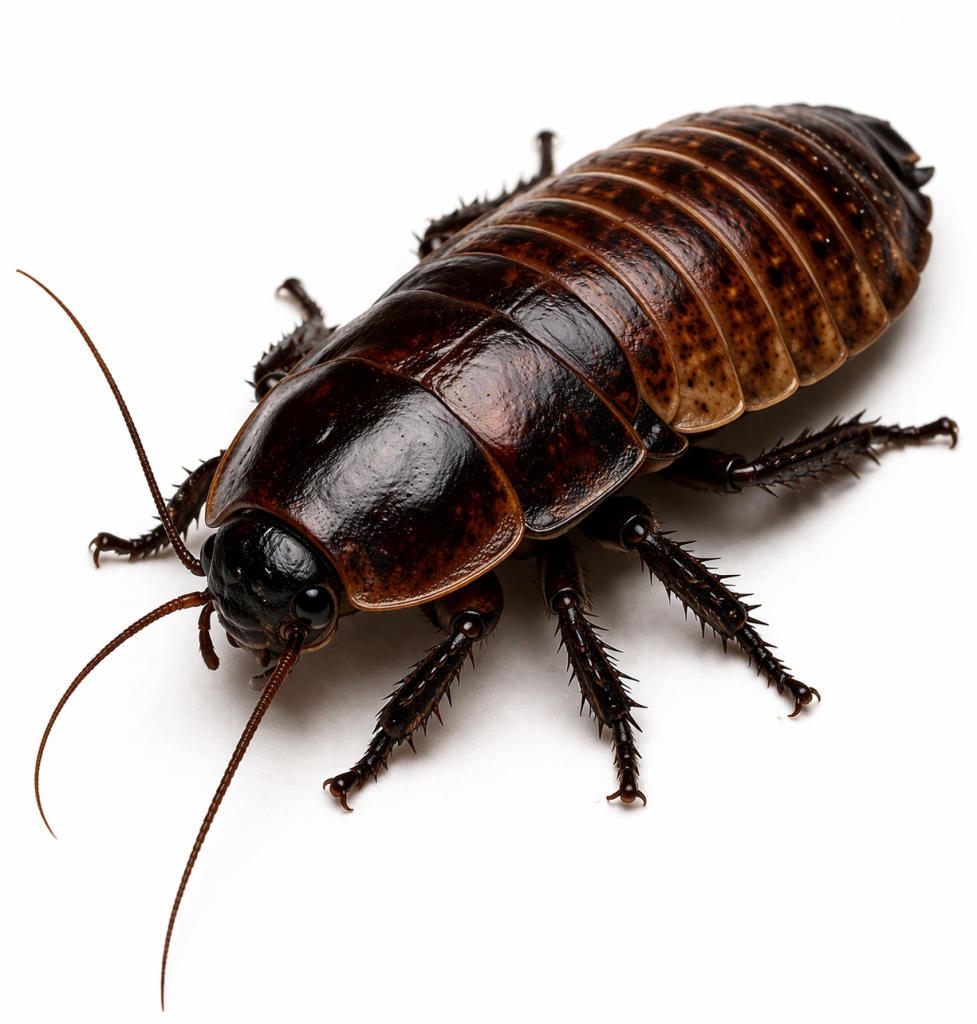
Large native species that lives underground and feeds on organic matter.
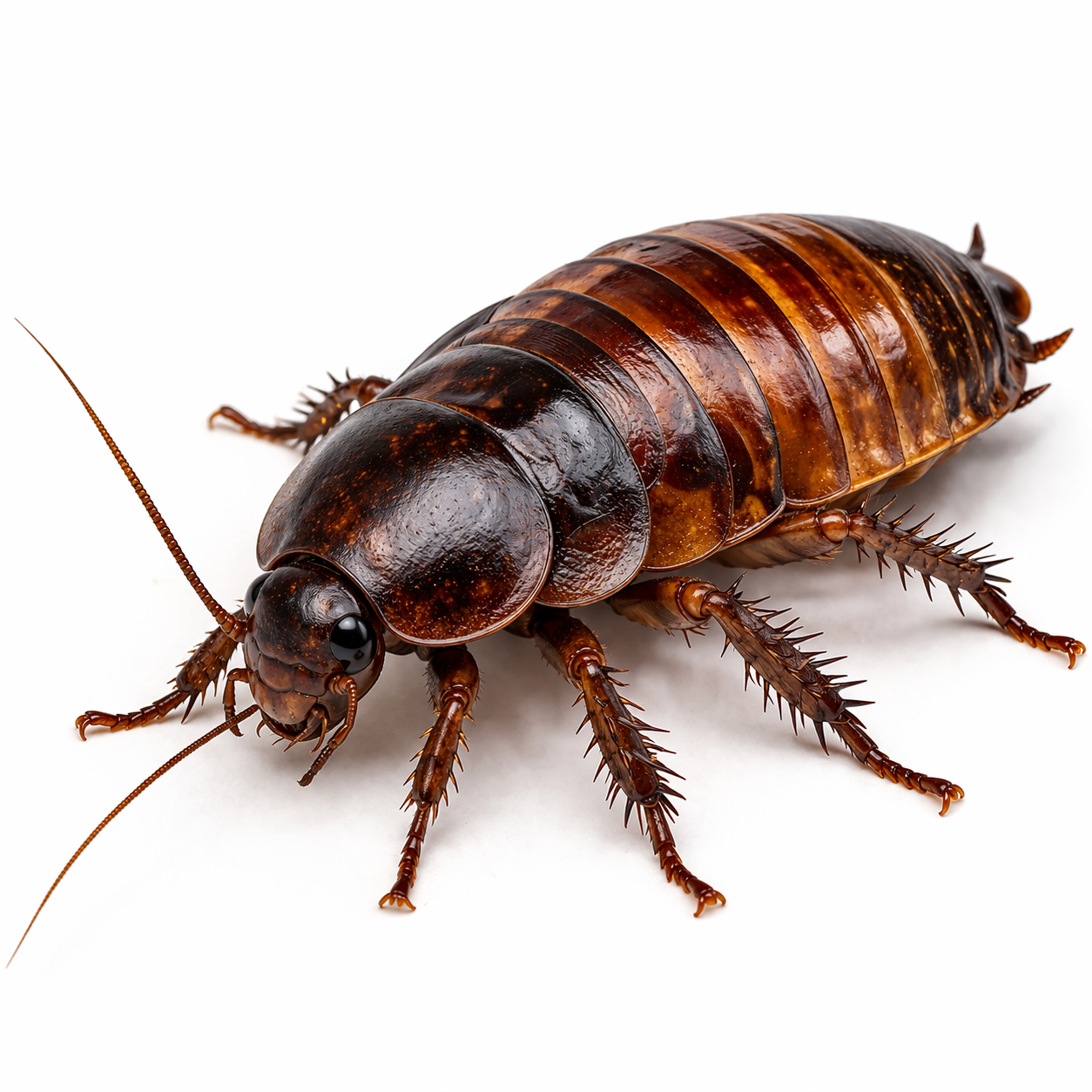
The Giant Burrowing Cockroach is the world’s heaviest cockroach and is native to parts of Queensland. Despite its impressive size, this remarkable insect is completely harmless and is considered one of Australia’s most fascinating native species. It spends almost its entire life underground inside deep burrows where it feeds on fallen leaves and other decaying organic matter, playing an important role in nutrient recycling within natural ecosystems. Unlike household cockroaches, Giant Burrowing Cockroaches do not invade homes, spread disease or contaminate food. They are slow moving, non-aggressive and may live for up to ten years under favourable conditions. Because of their ecological importance and limited distribution, they should be appreciated rather than treated as pests. Professional intervention is rarely, if ever, required, with correct identification helping homeowners distinguish this beneficial native insect from pest cockroach species.
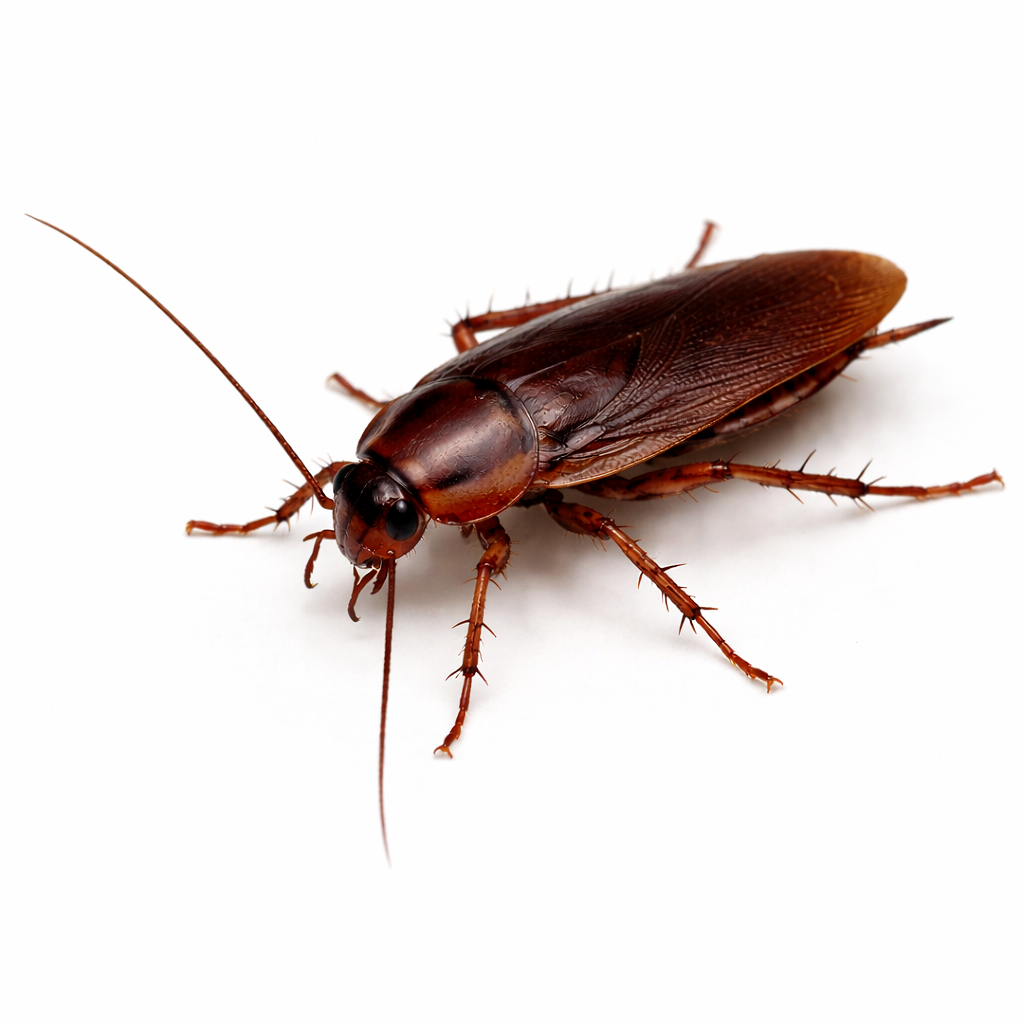
Flying cockroach attracted to light and commonly found around homes.
The Smokey Brown Cockroach is a large, dark mahogany-coloured species commonly found throughout Queensland’s warm and humid climate. Unlike German Cockroaches, this species is more closely associated with outdoor environments such as gardens, roof voids, sheds, compost piles and tree hollows, although it frequently enters homes during warm evenings because it is strongly attracted to lights. Smokey Brown Cockroaches are capable of flying and are often seen around windows, patios and outdoor entertaining areas after dark. Like other pest cockroaches, they can contaminate food and food preparation surfaces with bacteria carried from unsanitary environments. Eliminating excess moisture, removing organic debris and sealing potential entry points will help reduce activity around the home. Where infestations become established, professional pest control provides the most effective long-term solution by targeting breeding sites as well as the visible cockroaches.