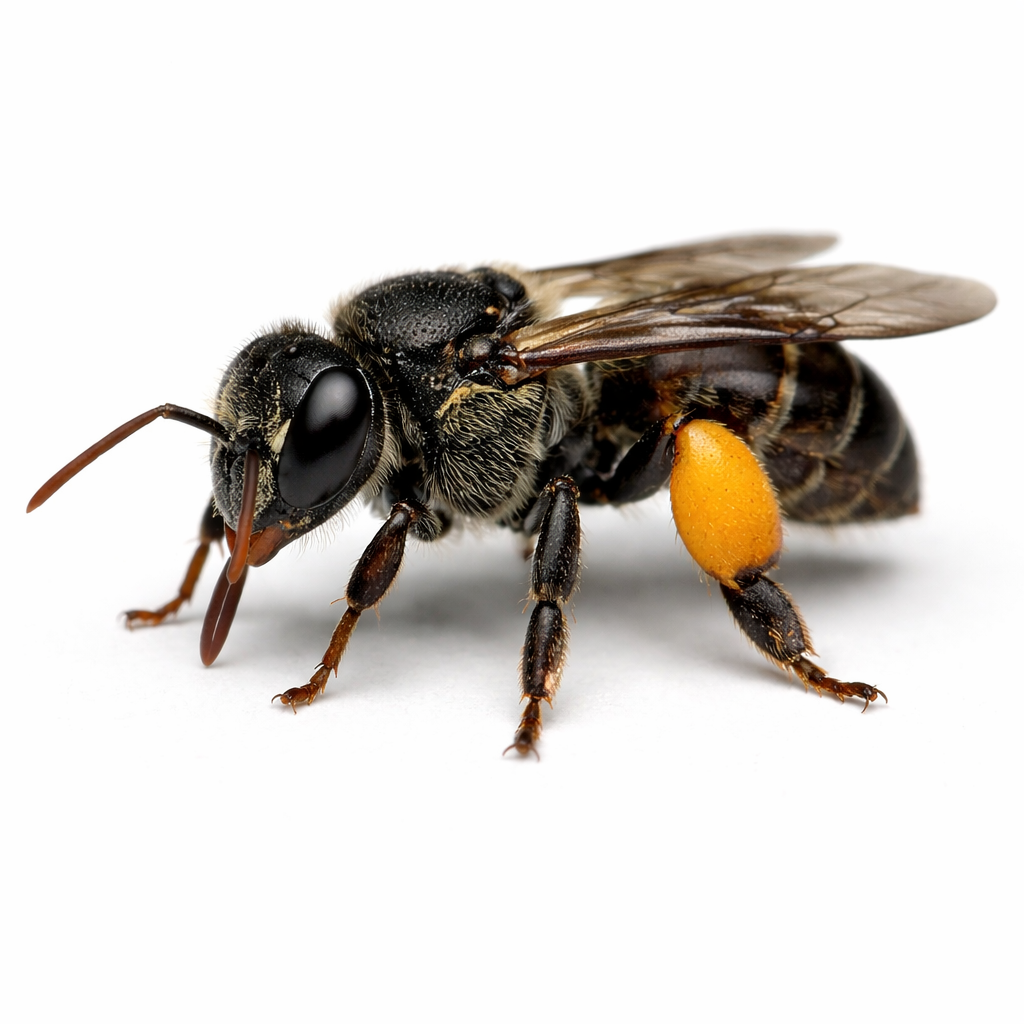
Native Australian bee species that produces honey and does not sting.
Stingless Bees are native Australian social bees that live in organised colonies and are highly valued for their important role in pollinating native plants, gardens and agricultural crops. As their name suggests, they do not possess a functional sting, making them harmless to people and ideal for residential environments. Stingless Bees commonly nest inside hollow tree trunks, wall cavities and other protected spaces where they construct unique wax and resin structures. They also produce small quantities of distinctive native honey that has become increasingly popular throughout Australia. While colonies occasionally establish themselves inside buildings, they are generally considered beneficial insects that should be protected wherever possible. If a colony is creating problems or occupying an unsuitable location, relocation by an experienced professional is usually preferred over destruction. Preserving Stingless Bees supports biodiversity and helps maintain healthy pollination across gardens, parks and surrounding natural environments.
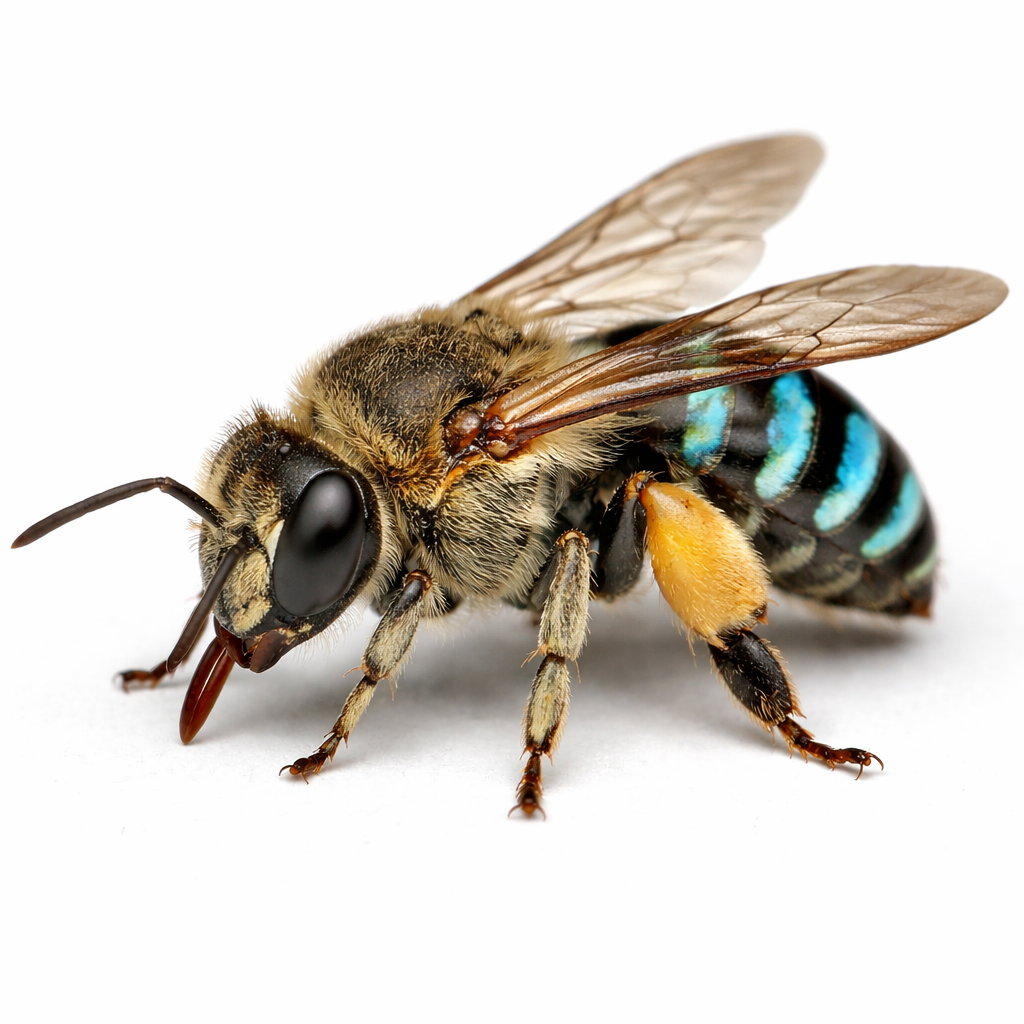
Native Australian bee known for its distinctive blue stripes and pollination role.
Blue-Banded Bees are distinctive native Australian bees recognised by the bright blue stripes that run across their black abdomen. They are important pollinators of many native plants, flowers and agricultural crops, making them highly beneficial to the environment. Unlike European Honey Bees, Blue-Banded Bees are solitary insects and do not form large colonies or produce honey. They commonly nest in soft sandstone, clay banks, old mortar or other suitable cavities rather than inside buildings. These bees are generally non-aggressive and will only sting if handled or threatened. Homeowners frequently encounter them in gardens rich with flowering plants where they play an important role in supporting healthy ecosystems. In almost all situations, Blue-Banded Bees should be left undisturbed as they provide valuable natural pollination services. If they establish nests in inconvenient locations, professional advice should be sought to determine the most appropriate and environmentally responsible solution.
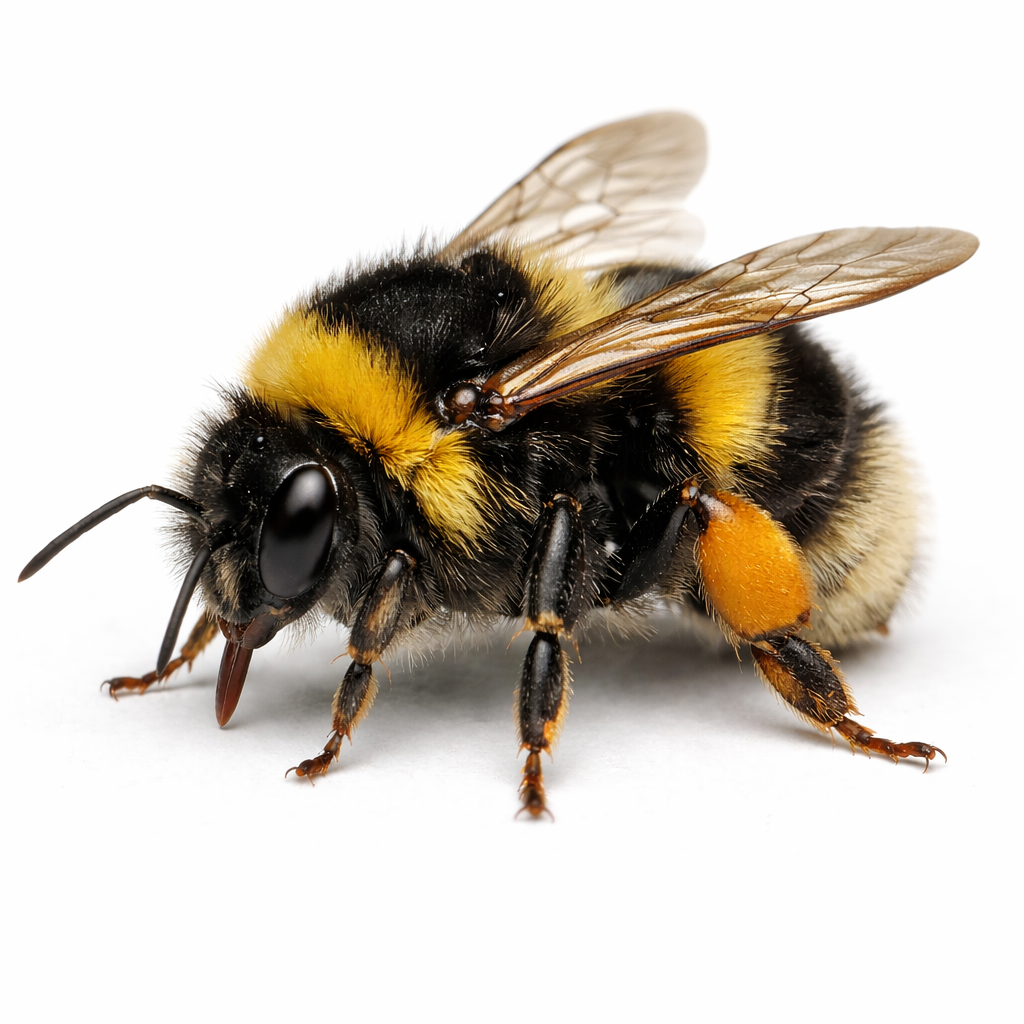
Large fuzzy bee known for pollinating flowers and crops.
Bumble Bees are large, furry bees well known for their gentle nature and exceptional ability to pollinate flowers, fruit trees and agricultural crops. Their thick bodies and loud buzzing flight make them easy to recognise, although true Bumble Bees are not naturally established throughout mainland Australia and are generally restricted to Tasmania. Because of this, many insects mistaken for Bumble Bees in Queensland are actually native bee species such as Carpenter Bees or Blue-Banded Bees. Bumble Bees live in small colonies and are usually not aggressive unless their nest is disturbed. Their primary role is pollination rather than causing problems around homes. If a large bee is discovered nesting on a property, correct identification is important before any action is taken. Professional pest advice can help determine the species involved and whether any management is necessary while protecting beneficial pollinators whenever possible.
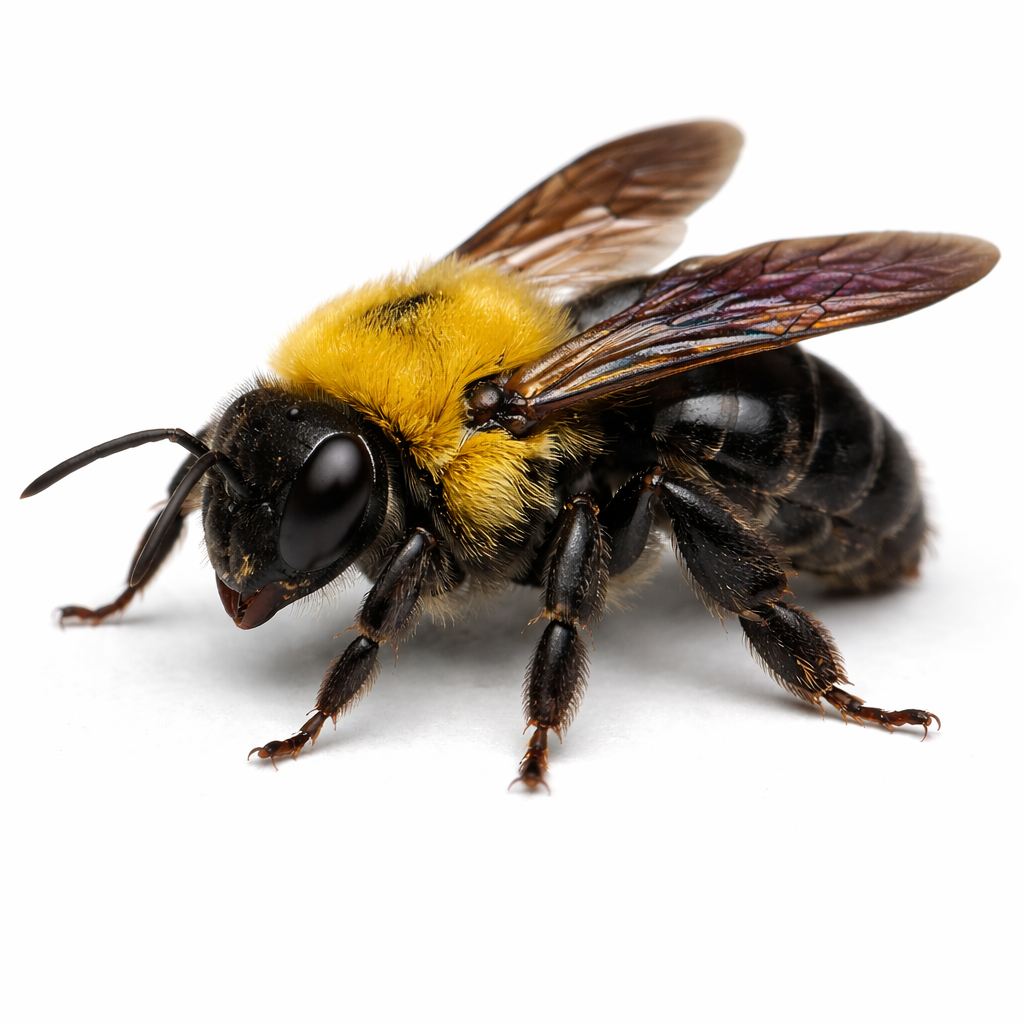
Large solitary bee that nests in timber structures and wood.
Carpenter Bees are among Australia’s largest native bees and are recognised by their robust bodies and loud buzzing flight. Unlike termites, Carpenter Bees do not eat timber. Instead, females excavate perfectly round tunnels into untreated or weathered wood where they create individual nesting chambers for their young. Common nesting sites include timber fences, pergolas, decks, outdoor furniture and exposed structural timber. Although this activity can create visible holes and minor cosmetic damage, Carpenter Bees rarely cause significant structural problems. They are valuable pollinators and are generally non-aggressive unless handled directly. Many homeowners mistakenly believe they are dealing with termites or wood-boring beetles, making correct identification essential. Where nesting activity becomes excessive or occurs in important timber structures, professional assessment can determine the most appropriate management strategy while balancing property protection with the conservation of these beneficial native bees.
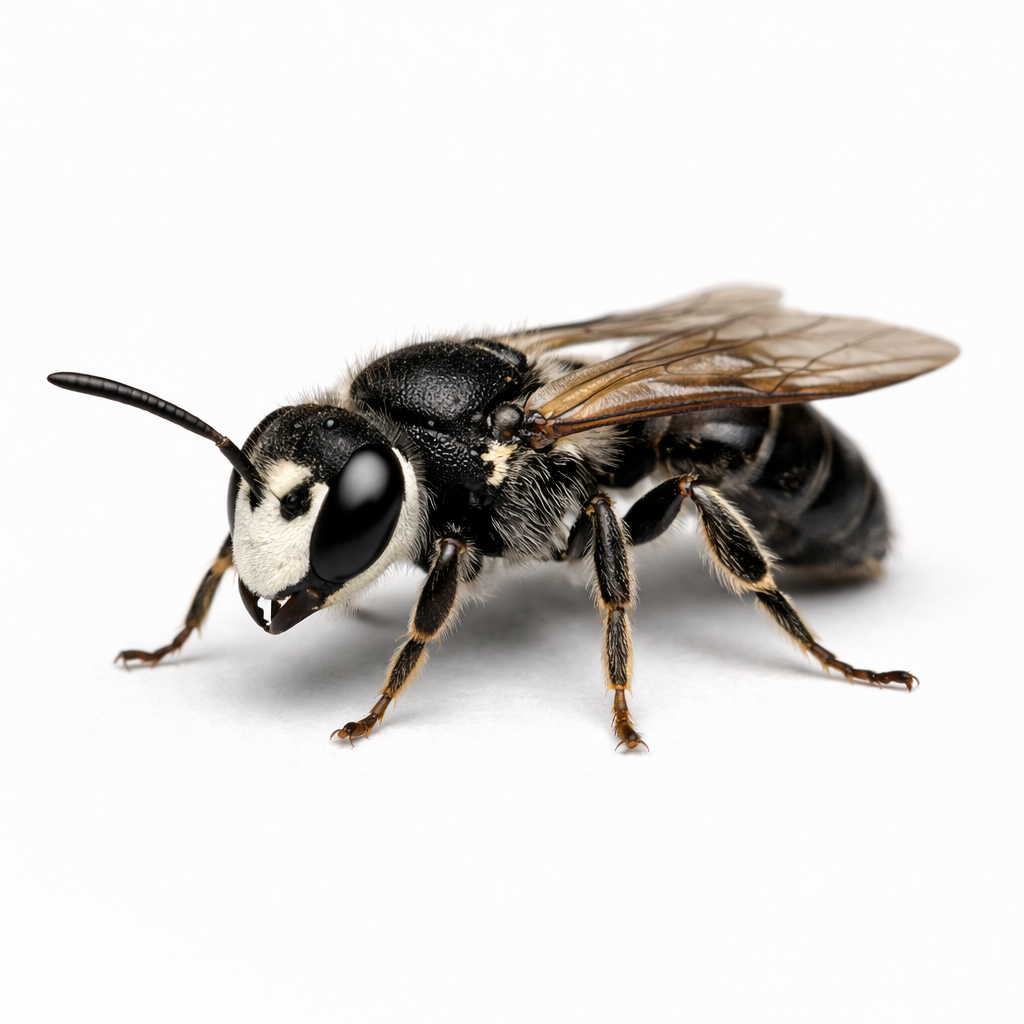
Small native bee with distinctive facial markings and pollination behaviour.
Masked Bees are small native Australian bees named after the distinctive pale markings that resemble a mask across their face. These solitary bees are commonly found throughout Queensland gardens, bushland and natural habitats where they play an important role in pollinating flowering plants. Unlike social bee species, Masked Bees do not build large hives or produce honey and rarely come into conflict with people. They usually nest in small holes within timber, plant stems or natural cavities and spend much of their time collecting pollen and nectar from a wide variety of flowers. Because they are gentle and rarely sting, they are considered highly beneficial insects that contribute to healthy gardens and local biodiversity. In almost every situation, Masked Bees should be encouraged rather than controlled. If identification is uncertain, professional advice can help distinguish these harmless native bees from pest insects that may require treatment.